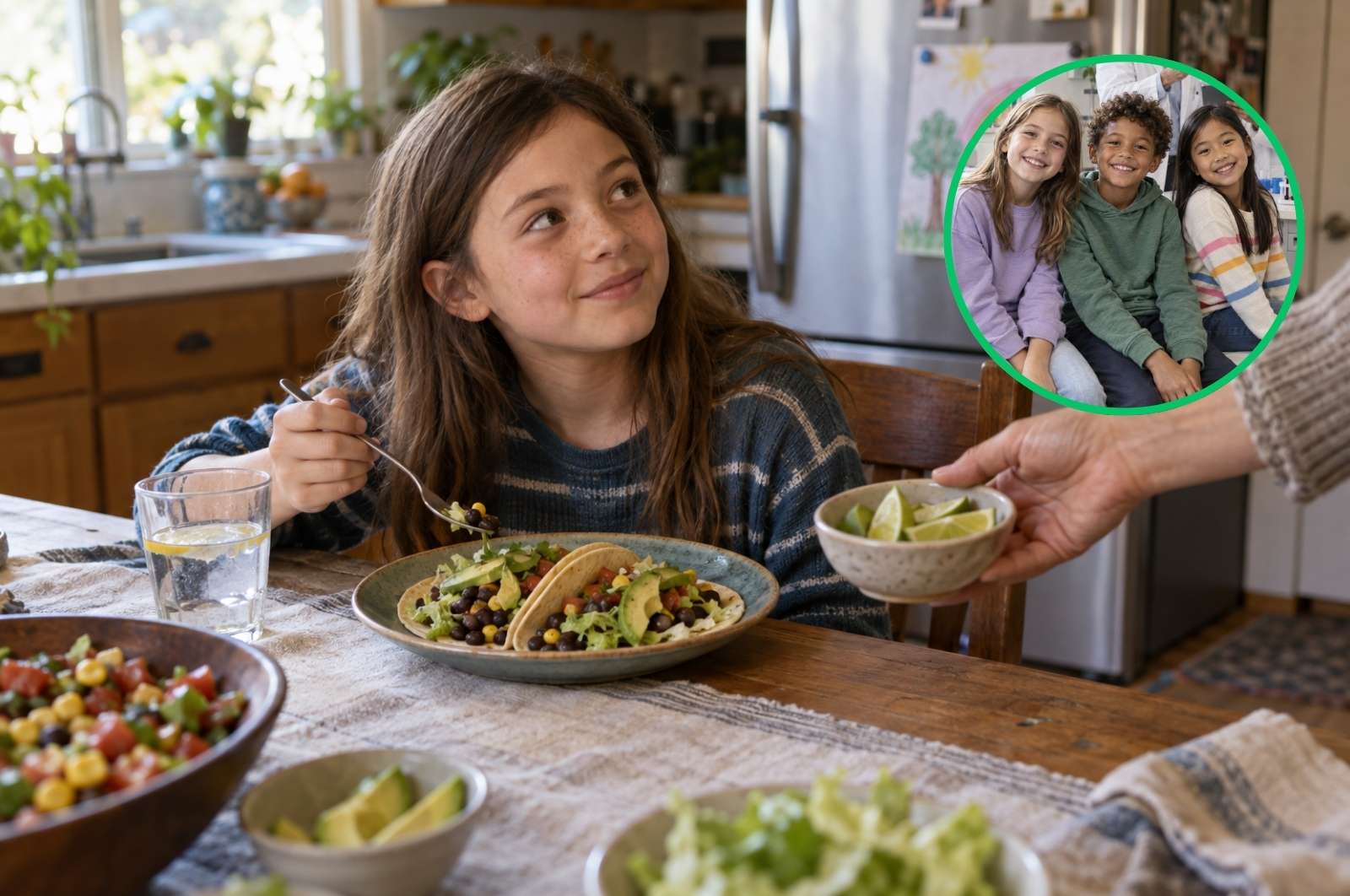

Swapping One Beef Dinner a Week for Beans Cuts More Carbon Than a Round-Trip Transatlantic Flight
The math on one weekly meal swap, using the largest food footprint dataset ever assembled, lands somewhere most people are not expecting.

What is new is the two-decade data behind it, presented this July at the American Society for Nutrition’s annual meeting.
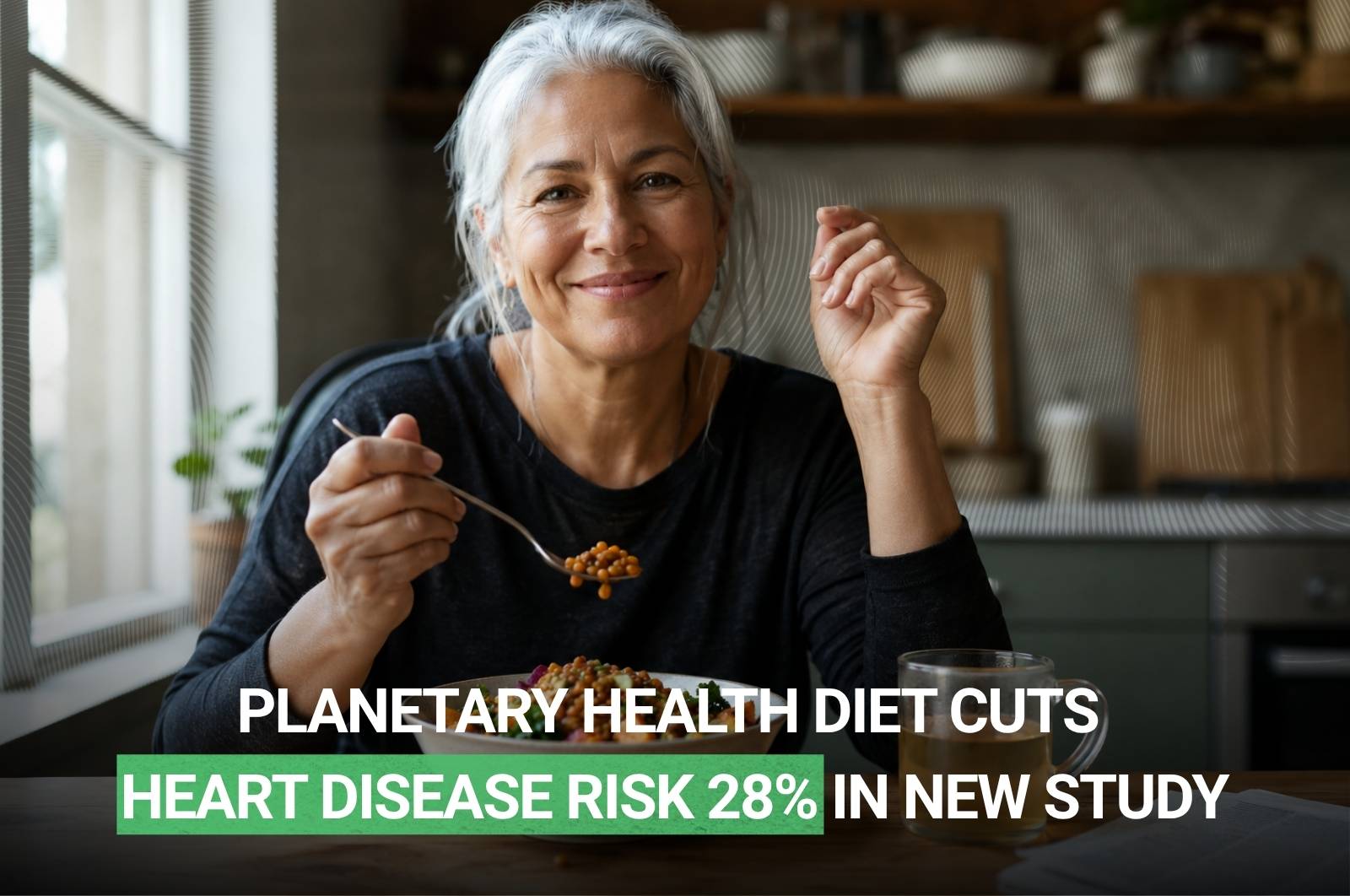
Researchers followed more than 65,000 postmenopausal women for 20 years and tracked what they ate.
The women whose diets most closely matched the Planetary Health Diet had roughly a 28 percent lower risk of cardiovascular disease compared to the women who followed it least closely.
Coronary heart disease risk dropped. Stroke risk dropped. Heart failure risk dropped.
Even the women in the middle, who ate a modestly plant-forward version of the diet without hitting the top adherence tier, still saw meaningful reductions.
The findings were presented at NUTRITION 2026, the American Society for Nutrition’s annual conference, on July 25.
The Planetary Health Diet was defined in 2019 by the EAT-Lancet Commission, a group of 37 scientists from 16 countries pulled together to answer one question: what diet feeds a global population of 10 billion people without wrecking the planet or killing the eaters?
The answer they landed on is not a vegan diet. It is close to one, but not quite.
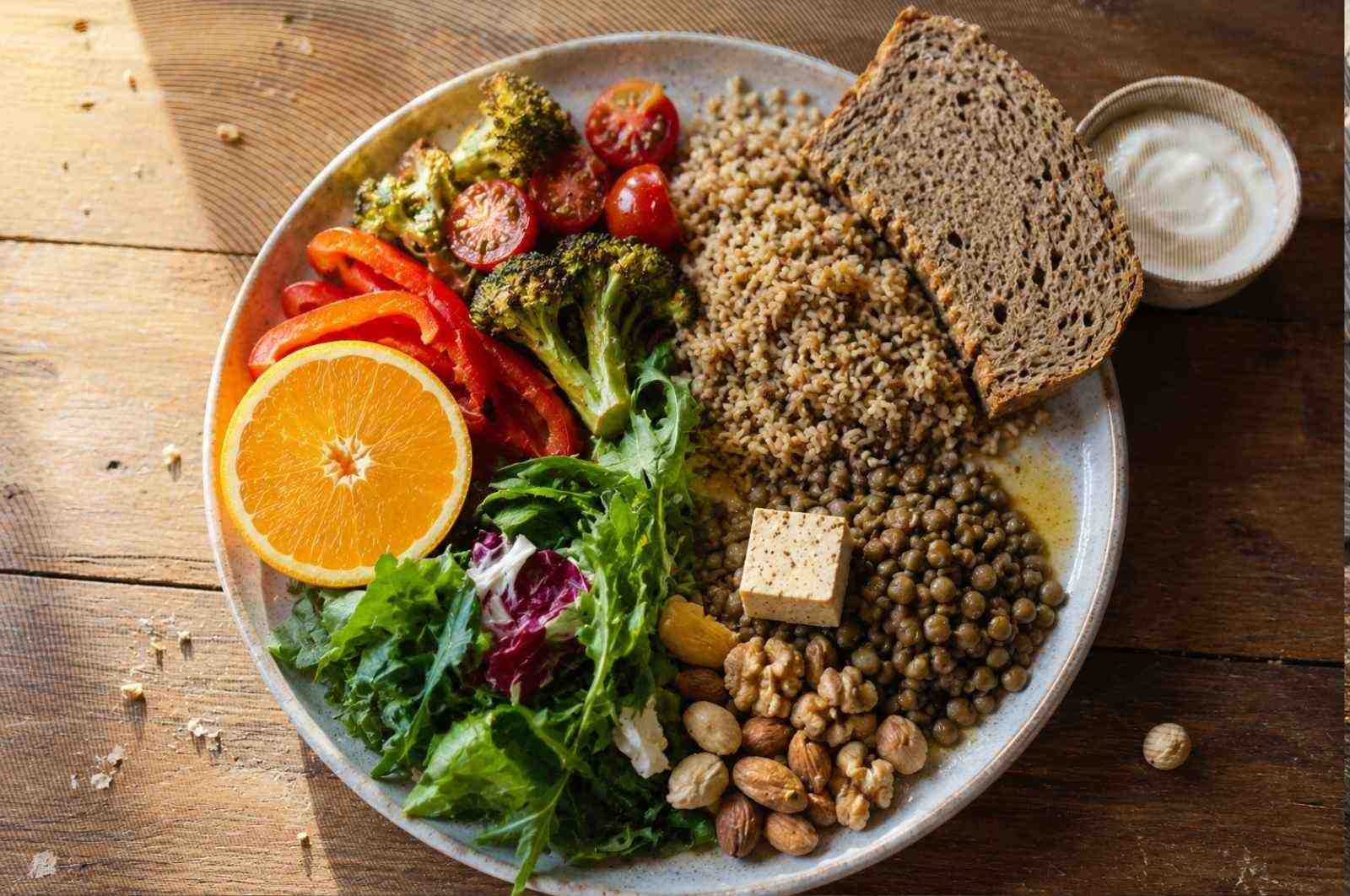
Roughly half the plate is fruit and vegetables. A quarter is whole grains. A quarter is plant proteins (legumes, nuts, seeds, soy foods).
Small amounts of dairy, poultry, and fish are allowed. Red meat is capped at about one serving per week. Added sugars and refined grains are kept low.
In practice, if you built a week of meals from the top 10 foods in the diet, they would be: whole grains, beans and lentils, leafy greens, other vegetables, fruit, nuts, seeds, olive oil, small portions of fish, and occasional dairy or eggs.
Meat is a garnish, not a centrepiece.
There is no shortage of "diet lowers heart disease risk by X percent" headlines.
Most are worth a shrug.
This one is worth attention for three specific reasons.
65,000 women is a large cohort. Large enough to detect real effects and to control for the usual confounders (age, activity level, smoking, existing cardiovascular risk).
It is not a small clinical trial on a handful of volunteers.
Twenty years is unusually long for a nutritional cohort study. Most run 5 to 10 years.
Two decades is long enough to see actual heart disease events unfold in the group, rather than short-term marker changes like blood pressure or cholesterol readings that may not translate into clinical outcomes.
The women in the highest adherence group got the biggest benefit (about 28 percent).
The women in the middle groups still got meaningful benefit. That gradient (more adherence, more benefit) is the pattern epidemiologists look for when they are trying to distinguish a real dietary effect from a statistical artefact.
Studies that show all-or-nothing effects with no gradient are usually not as trustworthy.
The Planetary Health Diet is less demanding than a full plant-based transition and more structured than a general "eat healthier" pep talk. It has a shape you can actually copy.
Half fruit and vegetables (roasted, raw, in soup, in salad, does not matter). A quarter whole grains (brown rice, wholegrain bread, oats, quinoa, wholemeal pasta). A quarter plant proteins (lentils, chickpeas, black beans, tofu, tempeh, nuts, seeds). Small amounts of dairy or eggs if you want them. Fish once or twice a week. Red meat capped at roughly one serving.
None of that is dramatic. It is a set of small anchor changes that, kept up over years, add up to the diet the 65,000 women in the top adherence group were eating.
This study lands on top of a large existing pile of cardiovascular research pointing the same direction.
A separate December 2025 study in The Lancet Regional Health, Europe followed more than 63,000 adults and found that healthful plant-based diets significantly reduced cardiovascular risk, while ultra-processed plant-based diets (packaged snacks, refined grain products, sweetened plant milks) did not.
That distinction matters. Plant-based is not the same as healthy. Whole-food plant-based is.
The American Heart Association’s 2026 scientific statement in Circulation came to the same conclusion earlier this year.
So did a 20-year Mediterranean-cohort study in the European Journal of Nutrition, which found a 26 percent reduction in cardiovascular disease risk among the closest followers of a plant-based Mediterranean pattern.
The Planetary Health Diet finding is not a single surprising result.
It is another data point in a converging body of research that has been quietly saying the same thing for a decade: whole plants at the centre of the plate, red meat at the edge, is what protects the heart.
The study lead, Shahamati, was explicit that an observational study cannot show that diet directly caused the lower risk.
Women who ate closer to the Planetary Health Diet may also have moved more, smoked less, had better sleep, or had different baseline health risks that were not fully captured.
That is why intervention trials matter. The Ornish and Esselstyn low-fat plant-based intervention studies, though smaller, have shown that dietary change alone can halt and in some cases reverse existing heart disease.
Observational evidence like this new study says the population-level effect is real.
Interventional evidence says the causal direction is the way the observational data suggests.
It is also worth flagging that the study cohort was 65,000+ postmenopausal women.
The size of the effect may not transfer directly to men, to younger women, or to people with very different baseline cardiovascular risk. The direction of the effect almost certainly does.
The magnitude may vary.
The Planetary Health Diet was defined in 2019 by the EAT-Lancet Commission. It is a mostly plant-based eating pattern designed to feed 10 billion people without exceeding planetary environmental limits.
Roughly half fruit and vegetables, a quarter whole grains, a quarter plant proteins, small amounts of dairy, poultry, and fish, and red meat capped at about one serving per week.
The 20-year cohort study of 65,000+ postmenopausal women presented at NUTRITION 2026 found about a 28 percent lower risk of cardiovascular disease among the women with the highest adherence.
Coronary heart disease, stroke, and heart failure risk all dropped.
Women with moderate adherence still saw meaningful benefit.
No. It is plant-forward, not plant-exclusive. Small amounts of dairy, poultry, and fish are allowed. Red meat is capped at roughly one serving per week.
That said, the diet’s protective effect appears to come primarily from what it includes (whole grains, legumes, nuts, vegetables, fruit) rather than from the small amount of animal product it permits.
A fully vegan version of the same pattern is entirely consistent with the diet’s framework.
The findings were presented at NUTRITION 2026, the American Society for Nutrition’s annual meeting, in July 2026.
Conference abstracts are reviewed by a scientific committee but do not undergo the same peer-review process as a full journal publication.
The results align closely with a large existing body of cardiovascular nutrition research, but should still be treated as one strong piece of evidence rather than a settled conclusion until the full paper is published.
The specific 28 percent figure is from a cohort of postmenopausal women.
The direction of the effect (more plant-forward diet, lower heart disease risk) is consistent with a large body of research in men, in younger women, and in mixed cohorts. The magnitude may not transfer exactly.
There is a version of the "eat more plants" advice that has been floating around for decades and has never quite landed. It has been soft. It has been vague. It has not come with a number attached.
This one comes with a number. 28 percent lower cardiovascular disease risk, in 65,000 women, followed for 20 years. That is the kind of evidence that changes what a cardiology consultation sounds like.
If the number has you curious about what a plant-forward week actually looks like on the plate, our plant-based recipe archive has enough weekly ideas to build a Planetary Health Diet week without any guesswork, and our beginner’s guide to going vegan covers the wider transition for anyone who wants to take the plant-forward pattern further.
Grocery list included!
No spam. Cancel anytime.