For the first time, French researchers separated plant-based diets by processing level, not just healthfulness. The gap between the two is much larger than most people eating this way realise.
Nutritionists have said it for years.
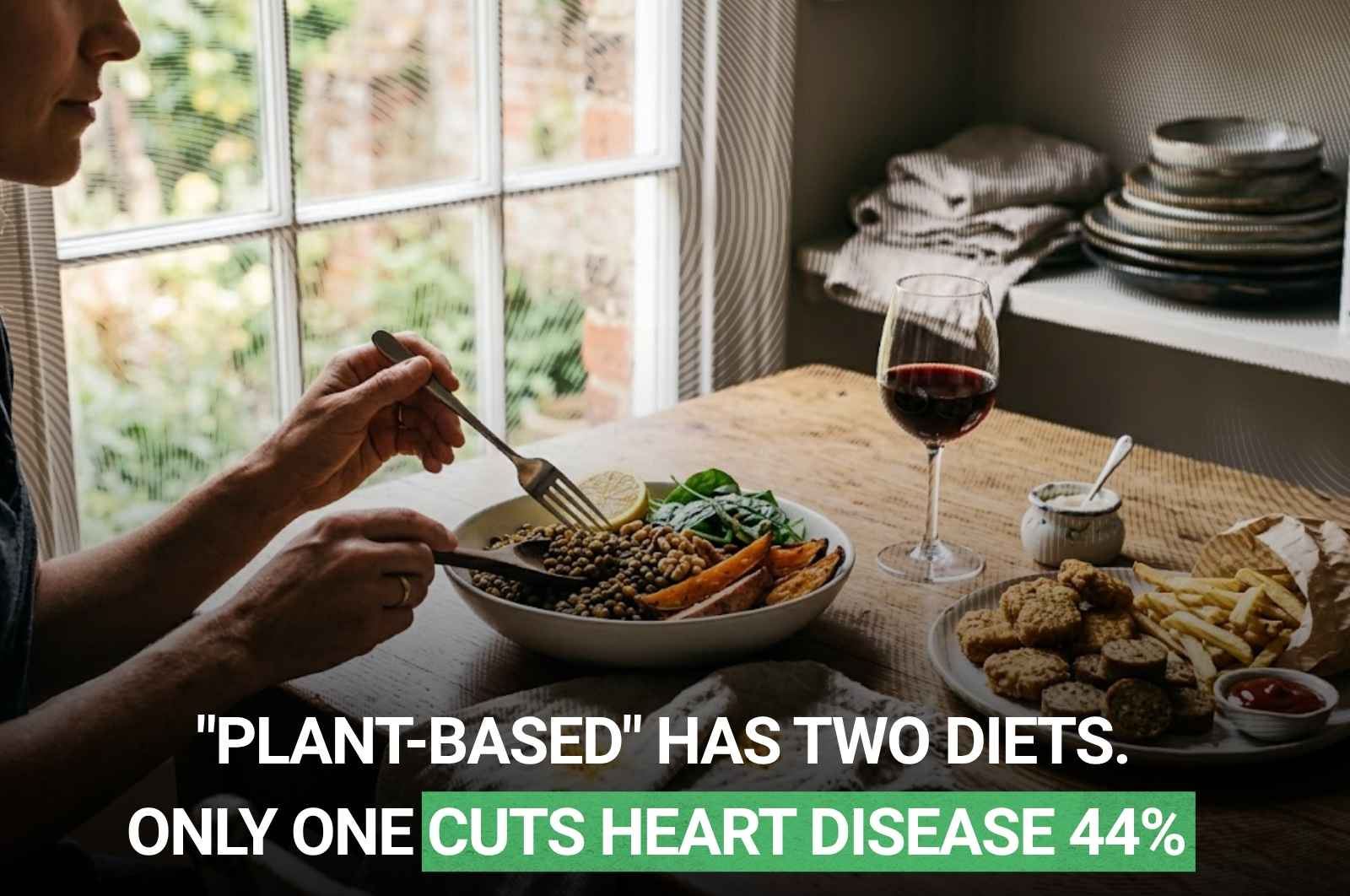
Not all plant-based diets are equal. A plate built around lentils, greens, and whole grains is not the same as a plate built around a plant-based nugget and a bag of vegan crisps.
What we did not have, until now, was a study large enough to put a real number on the gap.
That study just landed.
What the Researchers Actually Did
A team from INRAE, Inserm, and Sorbonne Paris Nord analysed the diets and health outcomes of 63,835 adults in the long-running French NutriNet-Santé cohort, published in The Lancet Regional Health – Europe in late 2025.
This is not the first paper to link ultra-processed food to heart disease.
It is the first to zoom in specifically on plant-based diets and split them by processing level, using a version of the NOVA classification adapted to French eating patterns.
The team built four new indices instead of the usual two.
Healthy plant-based plus mostly unprocessed.
Healthy plant-based plus mostly ultra-processed. Unhealthy plant-based plus mostly unprocessed.
Unhealthy plant-based plus mostly ultra-processed.
Participants were tracked for a median of nine years.
Every heart attack, stroke, and case of coronary heart disease was logged.
What They Found
The gap between the two ends of the plant-based spectrum was enormous.
The two patterns are separated by roughly 90 percentage points of coronary heart disease risk.
That is bigger than most people expect, and it is not driven by whether the food is plant-based. It is driven by how the food was made.
The Uncomfortable Finding for Long-Term Vegans
Buried in the same body of research is a detail the plant-based press has been slow to talk about.
A companion analysis of the NutriNet-Santé data (00115-7/fulltext) noted that vegetarians and vegans in the cohort consumed more ultra-processed food than meat eaters, mostly through plant-sourced meat and dairy substitutes.
That is not an argument against going vegan.
It is an argument against assuming that swapping a ham sandwich for a plant-based ham sandwich is a health upgrade on its own.
The vegan aisle now contains a lot of NOVA group 4 food. Nuggets, sausages, spreads, ready meals, cheese analogues, protein bars, and shakes are largely ultra-processed by definition, even when the ingredient list looks clean.
That does not automatically make them harmful.
But it does mean they cannot be treated as neutral.
Why Processing Matters, Not Just Nutrient Content
The interesting part of the paper is what happened when researchers controlled for nutrient quality.
Two diets could have similar fibre, similar protein, similar saturated fat, and land in very different risk brackets purely on processing level. That points to something the label cannot show.
Possible mechanisms sit in the physical form of the food itself. Refining and extrusion break the fibre matrix, which changes how quickly glucose enters the bloodstream.
Emulsifiers appear to alter the gut lining. Some additives and packaging residues behave as endocrine disruptors.
Hyper-palatability drives overeating without registering as hunger.
None of that has anything to do with whether the raw ingredient started as a soybean or a cow.
What This Changes for the Way We Shop
The healthiest plant-based diet in the study, the one linked to a 44% coronary heart disease reduction, does not look like the plant-based aisle at the supermarket.
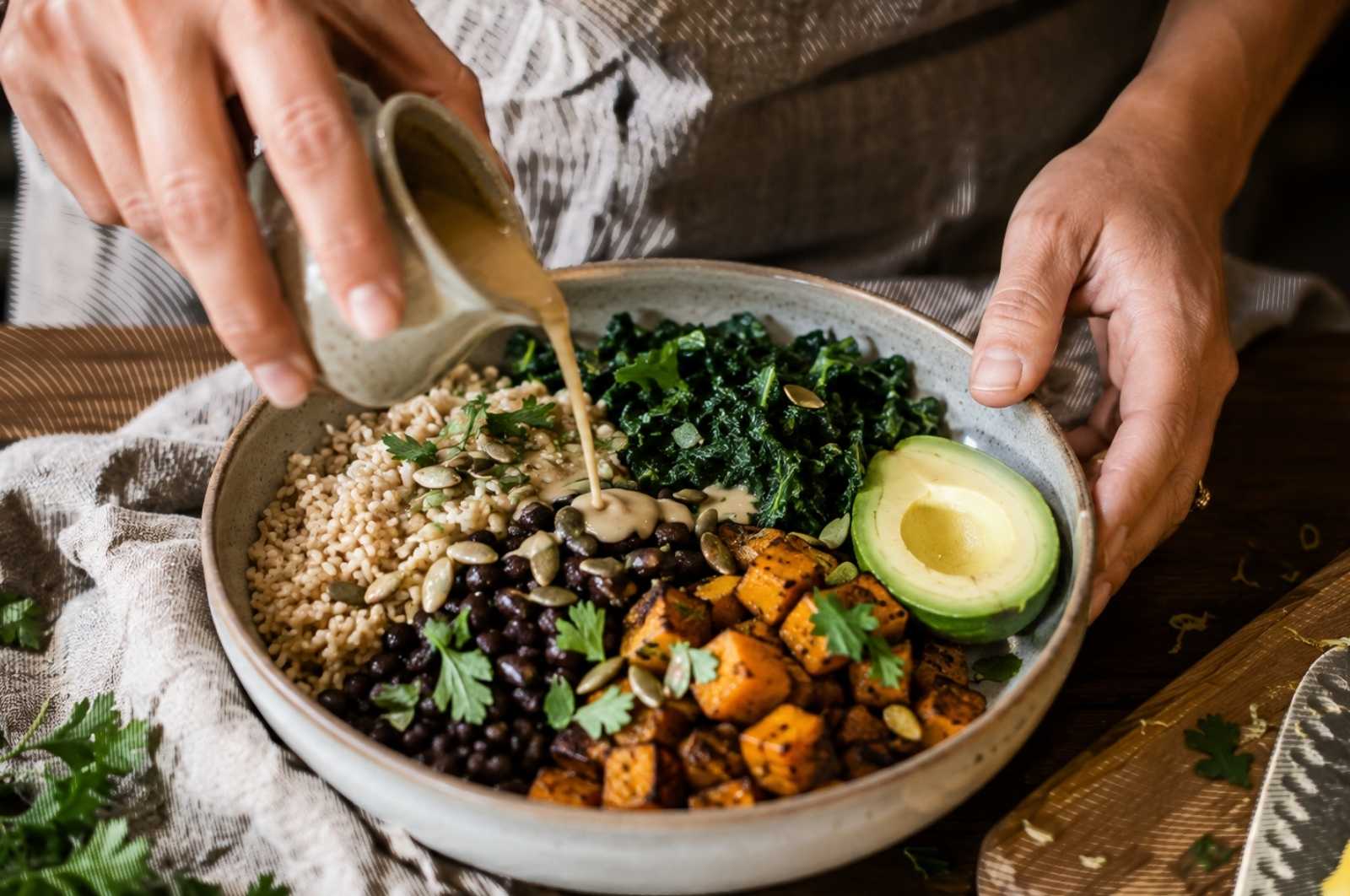
It looks like a home kitchen with a bag of dried lentils, a bunch of kale, a jar of tahini, and a bowl of oats on the counter.
A few practical shifts follow from the data:
Treat vegan meat substitutes as an occasional convenience, not a daily staple. Convenient does not mean therapeutic.
Move whole legumes into the centre of the plate. Beans, lentils, chickpeas, and edamame carry the fibre and polyphenol load the study associates with cardiovascular protection.
Read for the NOVA processing level, not just the ingredient list. If a food could not exist in a home kitchen, it belongs in the ultra-processed column.
Batch-cook one grain and one legume every week. It is the single change that reliably tips a plant-based diet from ultra-processed to whole-food dominant.
A Note on What the Study Does Not Say
This is an observational cohort, not a randomised trial. It shows association, not proof.
The researchers adjusted for the usual confounders (age, sex, smoking, physical activity, BMI, socio-economic factors) but the caveats that come with self-reported dietary records still apply.
It also does not say that ultra-processed vegan food will hurt someone the way a bacon-heavy diet will.
The comparison in the paper is within the plant-based population, not against a meat-eating benchmark.
A whole-food omnivore may still fare worse than an ultra-processed vegan on plenty of metrics.
What the paper does say is clear enough. Inside the plant-based world, processing level is not a minor detail. It is one of the biggest single levers on heart disease risk.
Most of us who eat this way already know, on some level, that a bowl of dhal and a plant-based cheeseburger are not the same food.
What the Lancet paper does is give that intuition a number.
A 44% reduction on one end and a 46% increase on the other, in a nine-year study of more than 63,000 people, is not the kind of gap we can wave away by pointing to the vegan label.
The plant-based case is still overwhelmingly strong. It just needs to be made honestly.
If we are going to keep telling people that this way of eating protects their heart, we owe them the second sentence too, that it protects their heart when it is built out of food, not out of packages.
If any of this is new territory, our 7-day vegan meal plan is a whole-food-first place to start.
No pressure. No preaching. Just a plate that the evidence keeps pointing us back toward.