The same ten items appear on the restock list of nearly every plant-based registered dietitian who publishes their grocery routine. Here is what they are and why each one earns its spot.
The useful thing about looking at how registered dietitians actually shop is that it strips away the aspirational nonsense.
Alina Petre, MSc RD, a well-known plant-based dietitian who publishes her own full pantry list, keeps the restock list short and repetitive. So does Sharon Palmer, RD, who runs sharonpalmer.com.
Comparing their lists against half a dozen others, ten items keep showing up in nearly every pantry.
None of them are exotic. All of them are cheap.
The reasons each one earns its spot on the weekly list are worth knowing.
The Ten Items
1. Rolled Oats
A 42-ounce canister costs under four dollars and lasts about three weeks of daily breakfasts for one person. Oats carry 5 grams of protein and 4 grams of fiber per half-cup dry serving.
They work as oatmeal, as the binder in veggie burgers, as a thickener in smoothies, and as the base for overnight oats.
The specific reason dietitians put oats near the top of the list is that they provide beta-glucan, a soluble fiber with reasonably strong evidence for lowering LDL cholesterol.
Three grams of beta-glucan daily, which is about one and a half cups of cooked oats, is the FDA-recognized threshold for the cholesterol health claim.
2. Dried Lentils
A one-pound bag costs about $1.50 and makes roughly twelve servings.
Red lentils cook in fifteen minutes with no soaking. Brown and green lentils hold their shape better in soups and salads.
A cup of cooked lentils provides 18 grams of protein and 15 grams of fiber.
They are also one of the most iron-dense plant foods available, which matters for anyone eating fully plant-based, since plant iron is absorbed less efficiently than animal iron.
3. Firm Tofu
Two blocks at around $2 each cover a week of weeknight dinners. Firm tofu has about 20 grams of protein per 14-ounce block, is a complete protein, and absorbs whatever marinade it meets.
Petre specifically flags calcium-set tofu as the better plant-based calcium source. The label will say calcium sulfate in the ingredients.
For anyone not using fortified plant milk daily, this is one of the few plant foods that reliably delivers meaningful calcium per serving.
4. Canned Chickpeas
A 15-ounce can is roughly a dollar and makes two servings.
Chickpeas are the workhorse legume of plant-based cooking, equally at home in curries, salads, soups, and hummus.
A can has about 15 grams of protein and 10 grams of fiber.
The specific pantry reason dietitians favor canned chickpeas over dried is time.
The gap in nutritional quality is negligible for someone who rinses them well, and the time savings mean they actually get used mid-week when motivation flags.
A small container runs three to four dollars and lasts a month or more. Nutritional yeast is a deactivated yeast sold as flakes or powder, usually fortified with B12.
One tablespoon covers the entire daily B12 need for an adult.
This is the one item on the list that is non-negotiable. Vitamin B12 is not reliably present in plant foods, and the Academy of Nutrition and Dietetics 2016 position paper specifies that all vegans should have a reliable B12 source.
Nutritional yeast is the pantry-based option.
The alternative is a weekly or monthly supplement.
6. Natural Peanut Butter
A 16-ounce jar is about three dollars and lasts two to three weeks for most households.
The dietitian pick is the single-ingredient version, nothing but ground peanuts, maybe salt.
The added-sugar and hydrogenated-oil versions do not clear the bar.
Two tablespoons carry 8 grams of protein and healthy monounsaturated fats.
Peanut butter also serves double duty as the base of satay sauces, the stir-in for oatmeal, the sauce for soba noodles, and the quick snack with apple slices.
7. Extra Virgin Olive Oil
Petre keeps extra virgin olive oil at the top of her oils category. The reasoning is well-documented.
The Mediterranean diet literature consistently shows that extra virgin olive oil is the cooking fat with the strongest cardiovascular evidence base, and it holds up for most everyday cooking temperatures.
The pantry version does not need to be the expensive single-estate bottling.
A mid-range extra virgin for everyday cooking and a nicer one for finishing is the setup most dietitians recommend.
8. Low-Sodium Soy Sauce or Tamari
A small bottle is around three dollars and lasts weeks.
Soy sauce is the backbone of most tofu marinades, the base of stir-fry sauces, and a reliable umami boost for soups and dressings.
The low-sodium version carries about 40 percent less sodium per teaspoon, which matters for anyone managing blood pressure.
Tamari is the gluten-free version, useful for households that include someone with celiac disease or gluten sensitivity. Nutritionally the two are nearly identical.
9. Ground Flaxseed
A small bag runs under three dollars and keeps six to eight weeks in the fridge once opened.
Flaxseed is the pantry source of alpha-linolenic acid, the plant omega-3 that converts partially to EPA and DHA in the body.
The specific detail dietitians emphasize is that whole flaxseeds pass through the digestive tract largely intact. Only ground flax delivers the actual nutrients.
One tablespoon of ground flax carries about 1.8 grams of ALA, which clears the daily recommended intake by itself.
A spoon in morning oatmeal, in smoothies, or stirred into pancake batter covers it.
10. Frozen Mixed Berries
Technically a freezer staple rather than a shelf-stable one, but it earns its spot. A 10-ounce bag runs about three dollars and provides polyphenols at a level fresh berries cannot match year-round at a reasonable price.
Frozen berries flash-frozen at peak ripeness retain nearly their full antioxidant content, often outperforming fresh berries that have been shipped and stored.
They work in smoothies, oatmeal, baked goods, and as a quick dessert thawed with a little vanilla yogurt alternative.
What a Weekly Restock Looks Like
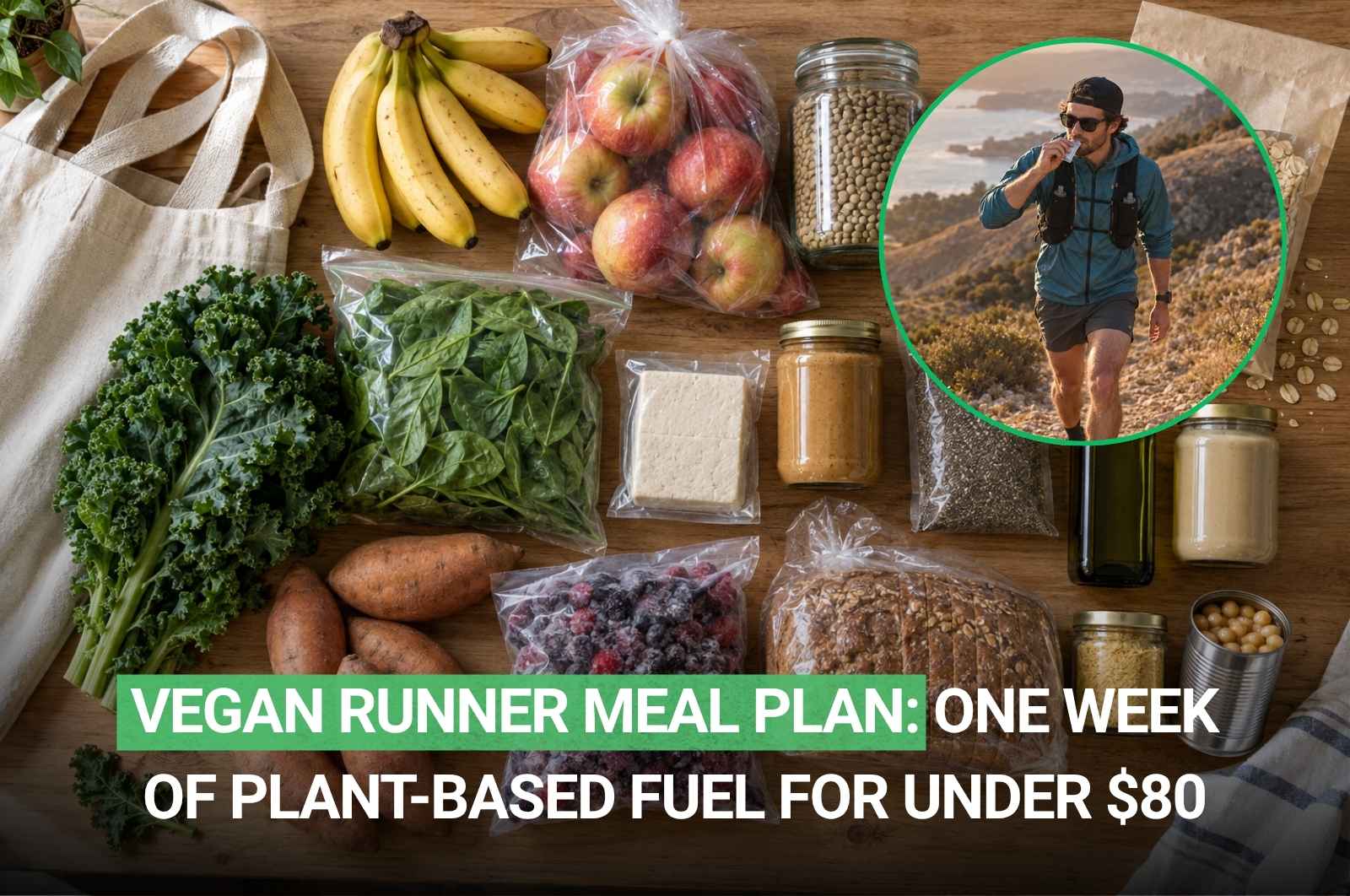
A full weekly restock of all ten items, assuming the pantry started at zero, runs about $30 at Walmart or Aldi in 2026 US pricing.
That is one shopping trip and roughly twenty-five minutes.
In practice, most dietitians restock three to five of these items a week, since oils, nutritional yeast, soy sauce, and flax do not need weekly replacement.
The core weekly items are oats, lentils, tofu, chickpeas, peanut butter, and frozen berries. The other four get restocked monthly.
Pantry lists get overcomplicated in a lot of plant-based writing.
They do not need to be. Watching how actual registered dietitians restock week after week reveals a short, repetitive list of inexpensive items that cover 80 percent of what any plant-based household will cook from.
If protein anxiety is still the thing holding back a dietary shift, our guide on hitting 100 grams of vegan protein without struggling walks through exactly how the ten staples above come together on a plate without any special effort.