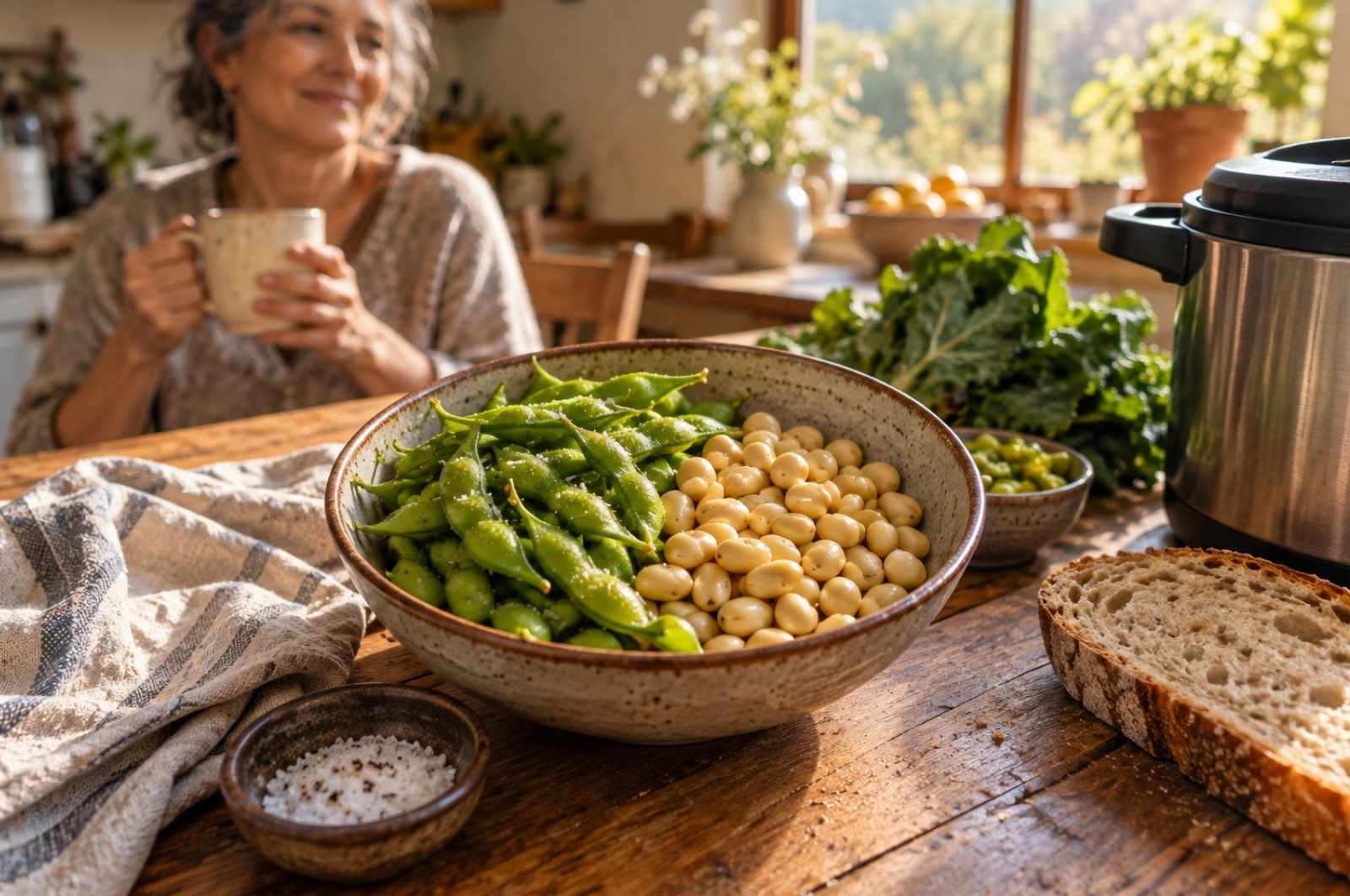
A Cold-Weather Vegan Meal Prep for a Full Week Under Sixty-Five Dollars in 2026
A seven-day plant-based plan built on real October 2026 US grocery prices. One shopping trip, three warming meals a day, and enough leftovers to skip the takeout app.

Functional mushrooms went from old herbalist remedy to coffee-bar staple in under a decade. The science is finally catching up.

If you have walked into a coffee shop in 2026 and seen lion’s mane or reishi listed beside the oat milk, you have already met functional mushrooms.
These are not the mushrooms you saute for dinner, and they are not the psychedelic kind either.
They are a category of fungi, used for centuries in traditional medicine in East Asia, that researchers are now studying for measurable effects on brain function, stress, and immune response.
The Vegan Society named functional mushrooms one of the defining vegan food trends of 2026 in its annual outlook.
The umbrella covers a small group of species: lion’s mane (Hericium erinaceus), reishi (Ganoderma lucidum), chaga (Inonotus obliquus), cordyceps, turkey tail, and shiitake.
They are sometimes called adaptogens, meaning compounds that help the body cope with stress rather than push it in any one direction.
Unlike caffeine, which stimulates, adaptogens are described as supporting the nervous system’s baseline.
The category has expanded sharply in commercial scale.
Mycoprotein alone is projected to grow from $761.8 million in 2025 to $1.4 billion by 2035, according to global market data cited by The Vegan Society.
Of the functional mushrooms, lion’s mane has the strongest peer-reviewed evidence so far.
A 2025 double-blind randomized placebo-controlled study published in Frontiers in Nutrition (Surendran et al.) tested an extract on healthy younger adults and found measurable acute effects on cognition and mood.
Earlier work by Mori and colleagues showed improvements in cognitive function in older adults with mild cognitive impairment.
The proposed mechanism is interesting.
Lion’s mane contains compounds called hericenones and erinacines that appear to stimulate Nerve Growth Factor, a protein that supports the maintenance and growth of neurons.
A separate ongoing trial of 135 Gen Z women is testing lion’s mane and a reishi blend at 1.8 grams per day for anxiety. Results are expected to publish through 2026.

Reishi is the older cousin. Used in East Asian traditions for over two millennia, it was historically rare enough that its consumption was reserved for royalty.
Modern research has been more cautious but still encouraging.
Smaller human trials on reishi have shown reduced anxiety and improved sleep quality over a 60-day intervention period.
The compounds doing the work appear to be triterpenes and beta-glucans, which interact with the immune system and the stress response.
Reishi tends to be the mushroom people reach for at night, not first thing in the morning.
Chaga is the antioxidant.
It is unusually high in polyphenols and is studied mostly for long-term cellular and immune effects rather than acute cognitive improvements.
Cordyceps is the energy mushroom in the popular imagination.
Most of the focus-and-endurance evidence so far comes from animal studies, with smaller human trials suggesting modest improvements in physical performance.
The science here is younger.
Turkey tail and shiitake round out most blends, mainly for their immune and prebiotic benefits.
Most people are not eating these mushrooms whole.
They are buying powdered extracts and folding them into other things.
The common formats: lion’s mane stirred into morning coffee, reishi added to evening cacao or a warm oat-milk drink, cordyceps blended into a pre-workout smoothie, full-spectrum blends in capsules taken once daily.
In the UK, brands like Love Mushroom and Unconform are leading the wave with mushroom-infused oat milks and instant coffees, often blended with other adaptogens like rhodiola, ashwagandha, or ceylon cinnamon.
In the US, Four Sigmatic and Om Mushroom dominate the category.
One practical detail matters when you shop.
Fruiting bodies and mycelium are not the same thing.
Most rigorous studies use fruiting bodies, which contain higher concentrations of the active compounds.
A product labeled "mushroom mycelium grown on grain" is a different starting material than one labeled "100% mushroom fruiting body," and the price difference reflects it.
This is where honest writing matters. The science on functional mushrooms is promising but still early in important ways.
Many existing studies are small, short in duration, or animal-based.
The Alzheimer’s Drug Discovery Foundation’s 2025 review of lion’s mane noted that cognitive effects in clinical trials have been mixed, with small participant numbers and short treatment windows limiting confident conclusions.
Well-designed larger and longer trials are still needed.
That does not mean these mushrooms do not work. It means the marketing has, in some cases, run ahead of the data.
For most healthy adults, the safety profile is reassuring.
Side effects are uncommon, and the dosing in trials has been generally tolerated well.
Anyone on medication, especially blood thinners, should talk to a doctor before adding a daily extract.
Our coverage of how mushrooms are reshaping fashion, food, and packaging sits alongside this one. The same kingdom of organisms quietly turning into leather is also quietly turning into the next wave of wellness drinks.
If functional mushrooms are something you are exploring partly as a step toward a more plant-forward life, our guide to starting a vegan lifestyle without feeling overwhelmed is a soft, friendly first stop.
Grocery list included!
No spam. Cancel anytime.