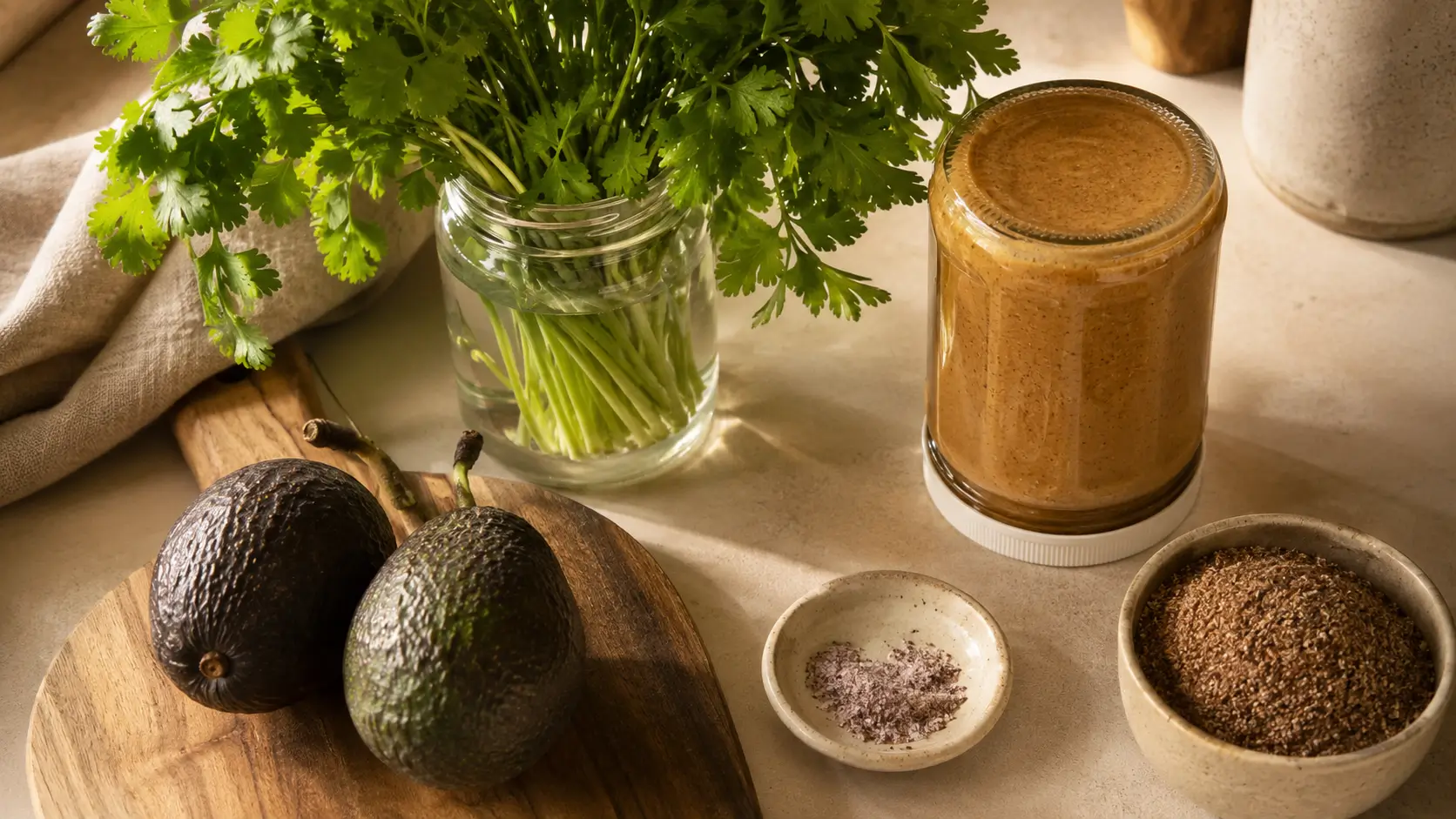
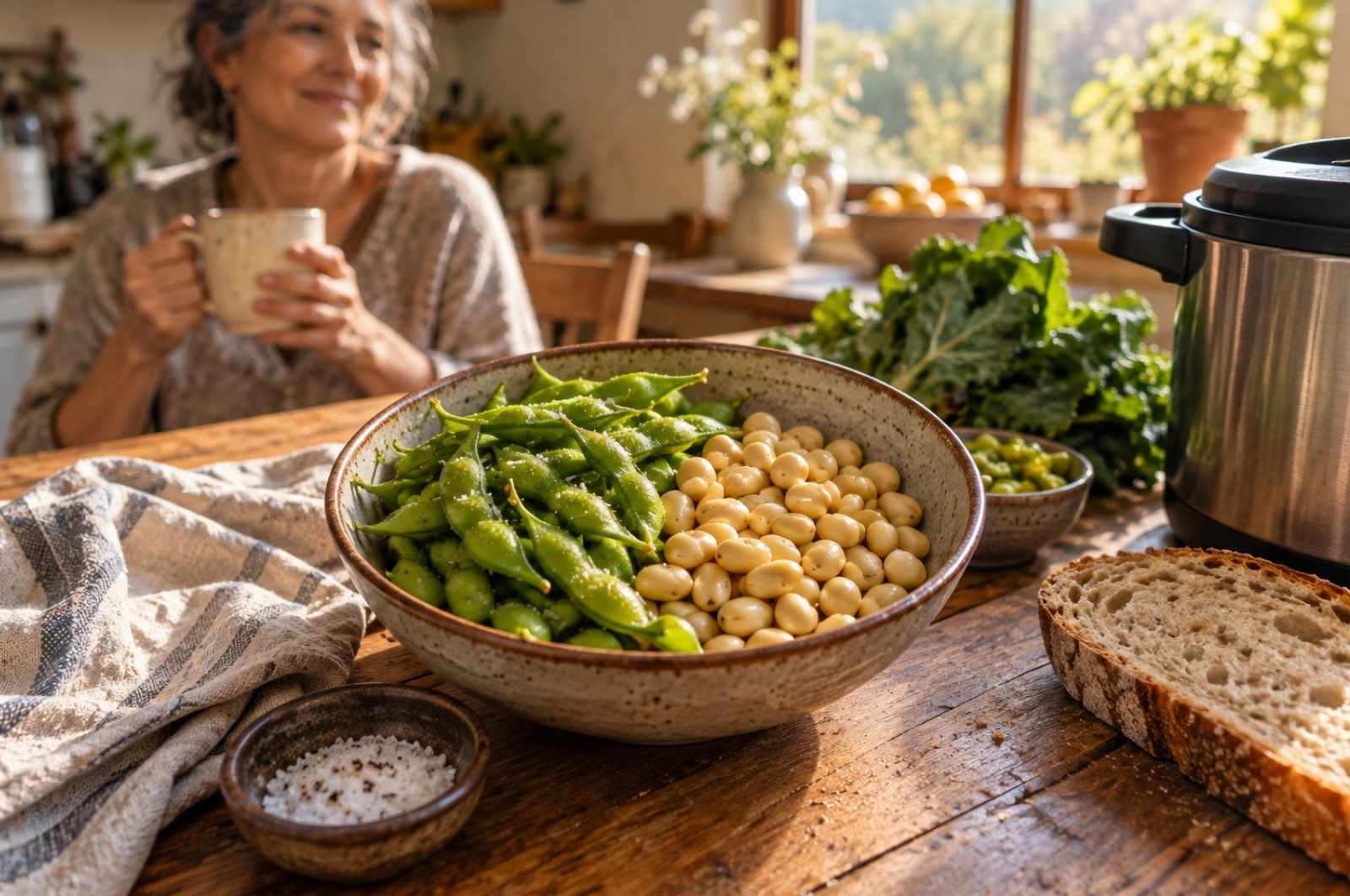
A few weeks of trying these and I stopped throwing out limp herbs, gave up scraping nut butter off the lid, and finally cracked the eggy tofu scramble.
The first year I cooked vegan, I wasted a lot of food. Herbs went limp by day three. Avocados were perfect for 47 minutes and then brown. Half my flax seeds passed through me whole.
The fixes were not glamorous. Most of them came from watching other vegan cooks online, then testing whether the advice actually held up over a few months in my own kitchen.
A handful of them did. The rest were noise.
Here are the tricks that earned their place, with a short note on why they work when you peek under the hood.
Store Herbs Like Flowers, Not Like Salad
Cilantro and parsley wilt fast because they keep transpiring after you cut them, and a plastic clamshell traps the moisture they exhale.
Trim the stems, drop the bunch in a glass with an inch of water, and loosely tent a bag over the leaves if you have fridge room.
Mine usually last around ten days this way. The supermarket clamshell gives me maybe four.
Green onions are even better at this. They keep growing in the jar. I have re-snipped the same scallion bunch three times before tossing it.
If you’re already deep into the herb game and find yourself buying handfuls each week, growing your own at home might be the next step.
Buy Avocados With the Button Still On
The little stem nub at the top of an avocado is doing real work. While it stays attached, the fruit underneath is sealed off from oxygen and bacteria.
Once it falls or gets knocked off, browning starts inside, usually around the cap, even if the outside still looks fine.
So at the store, pick rock-hard avocados with the stem still attached and ripen them on the counter at home. You skip the bruises from people squeezing every single one.
If a few ripen at once, move them to the fridge. The cold slows the ethylene gas the fruit is producing.
Flip the Nut Butter Jar Upside Down
Natural peanut and almond butter separates because there are no added emulsifiers holding the oil and solids together.
Stirring it the day you open it is a small crime against your kitchen. Oil down the side of the cabinet, peanut butter under your fingernails.
Store the jar upside down for two or three days before you open it. Gravity does the mixing for you. By the time you open it, the oil has worked its way through the solids.
Then keep it in the fridge so it does’t separate again. It firms up a little but spreads fine on warm toast.
Use Kala Namak Whenever You Want an Eggy Flavor
This one feels like a magic trick the first time. A pinch of black salt on tofu scramble, chickpea omelet, or vegan egg salad and suddenly the dish tastes like brunch.
Kala namak is mined in the Himalayas and contains sulfur compounds, including hydrogen sulfide, which is the same gas your nose picks up from a soft-boiled egg.
It’s the smell, not the texture, that makes scrambled eggs read as eggs to your brain. Replicate the smell and most people stop noticing the eggs are not actually there.
A tiny amount goes far. I use roughly an eighth of a teaspoon per block of tofu and add it at the end so the heat does’t drive off the sulfur compounds.
Grind Your Flax Seeds (Whole Ones Are Almost Useless)
Whole flax seeds have a hard outer coat that human digestion struggles to crack. A frequently cited Penn State study found that milled flax delivered significantly more alpha-linolenic acid into the bloodstream than whole seeds in the same dose.
If you’re eating flax for the omega-3s, grinding is not optional. Whole seeds are mostly fiber with extra steps.
I grind a week’s worth in a cheap coffee grinder, then keep it in a jar in the fridge. Ground flax goes rancid faster than whole, but a week in the cold is fine.
Chia seeds are different. Their outer coat dissolves in water, so you can use them whole. Soaking them in plant milk overnight gives you most of the benefit.
Trust Frozen Produce More Than You Trust Fresh
A common worry is that frozen fruit and vegetables are nutritionally inferior. They are usually not.
A 2015 University of California study compared frozen and fresh broccoli, blueberries, corn, strawberries, and other staples and found that frozen often matched or beat fresh on vitamin C and folate, partly because frozen produce is picked ripe and flash-frozen within hours.
The fresh green beans in your supermarket might have been picked two weeks ago and shipped across an ocean. Frozen wins on price, waste, and often nutrition.
I keep frozen spinach, peas, broccoli, mango, and berries on rotation. Smoothies are obvious, but frozen spinach disappears into pasta sauces, dals, and curries without anyone noticing.
Cook Rice and Lentils in One Pot
Throwing red lentils in with white rice changes a side dish into a complete meal. The grains finish in roughly the same time, around fifteen minutes.
The amino acid profiles also complement each other. Lentils are higher in lysine, rice is higher in methionine, and together they give you a balanced protein hit without any fancy planning.
Rinse both well before cooking. It cuts the starchy stickiness and removes some of the bitter compounds on the surface of lentils.
Add a bay leaf and a pinch of cumin to the pot and you have a base for a dozen different dinners. Curl it with sautéed onions and tomato for kitchari, or top it with a peanut sauce.
If you want a full week of meals that lean on this kind of pantry-first cooking, our 7-day vegan meal plan is built around it.
Read the “Contains” Line, Not the Whole Ingredient List
Most packaged foods in the US, UK, EU, and Canada are legally required to list allergens like milk, eggs, and fish in a Contains line under the ingredients.
If you’re scanning a label for hidden dairy or egg, that line tells you in two seconds what skimming the whole ingredient list takes a minute.
The May contain line is different. That refers to cross-contamination risk from shared equipment. Some strict vegans avoid those products, others don’t. It’s a personal call, not a hard rule.
FAQ
Do I really need to grind flax seeds every time?
You don’t have to grind them every time, but you do need to grind them before you eat them. A week’s worth in the fridge is fine. Longer than that and you start losing the omega-3s to oxidation.
Is kala namak the same as regular pink Himalayan salt?
No. Kala namak is a different mineral salt, processed in a way that gives it the sulfur compounds. Regular pink salt won’t give you the eggy flavor.
How long do upside-down nut butter jars need to sit?
Two to three days is plenty. Some people leave them upside down permanently in the cabinet between uses.
Are frozen vegetables ever worse than fresh?
For texture in raw dishes, fresh wins. For cooked dishes, frozen is usually just as good and often more nutritious than fresh produce that has been traveling for a week.
Why does my cilantro still wilt in water?
Probably the water is not getting changed, or the leaves are touching the water and rotting. Change the water every two or three days and keep only the stems submerged.
What’s Worked for Me
None of these are life-changing on their own. The point is the stack.
Together, they have cut my weekly food waste to almost nothing and trimmed prep time enough that I cook on weeknights without dreading it. The herbs survive. The avocados ripen on schedule. The tofu scramble actually tastes like breakfast.