A six-month Deakin University trial found a daily serving of peanut butter significantly boosted muscle power in older adults, with brain and memory benefits in a second study.
For years the popular advice about peanut butter was to keep it as a treat.
It is calorie dense.
It has fat. If you are trying to manage weight, cap it at a tablespoon.
A new six-month clinical trial out of Deakin University in Melbourne, published in the peer-reviewed Journal of Cachexia, Sarcopenia and Muscle in March 2026, argues that older adults have been getting bad advice.
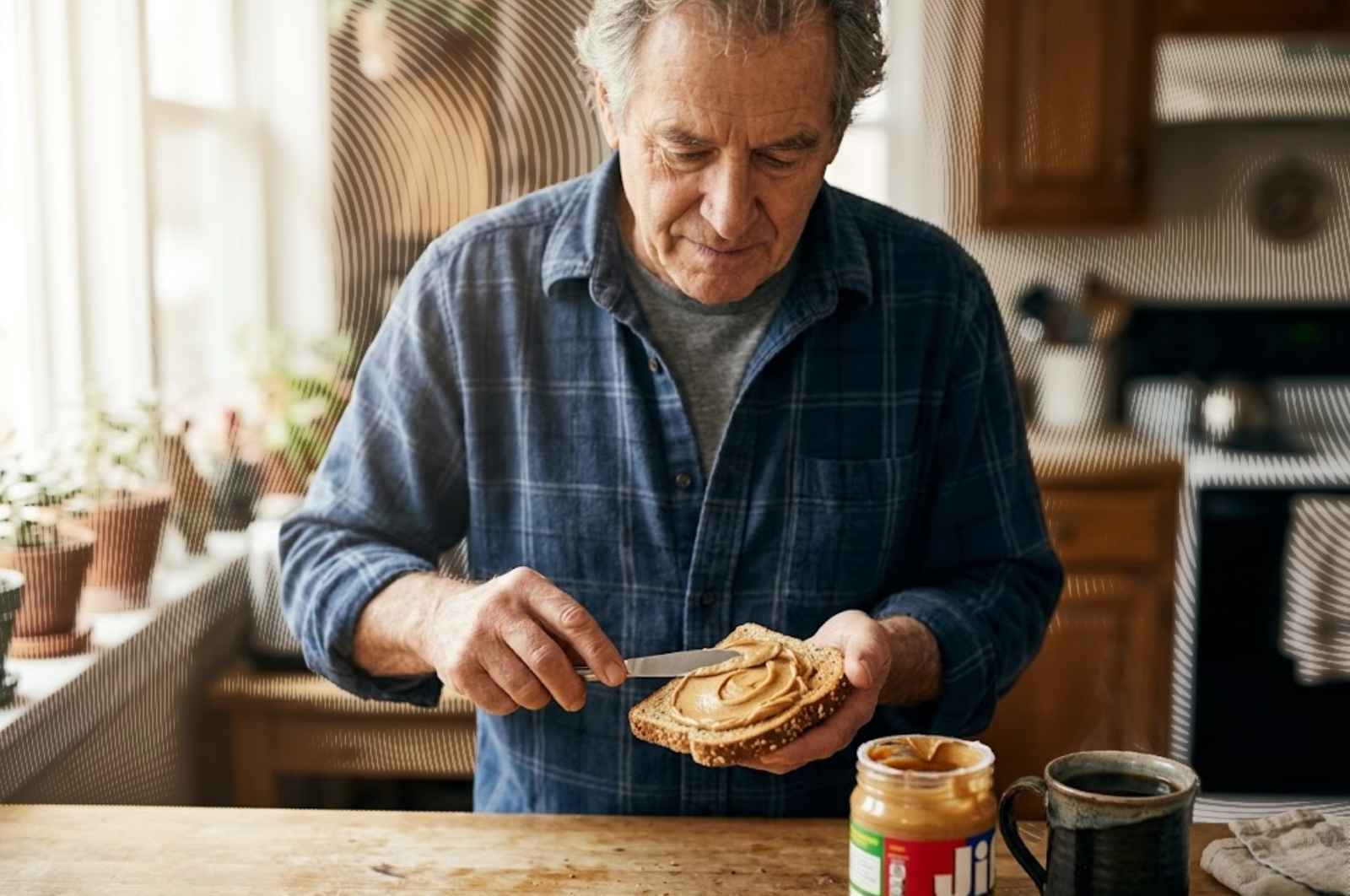
The trial, known as COINS for the Capacity of Older Individuals after Nut Supplementation, gave a daily serving of peanut butter to adults aged 66 to 89 at risk of falls.
After six months the peanut-butter group showed a significant increase in muscle power. No corresponding weight gain was recorded.
What the Trial Actually Measured
The study enrolled 120 older adults deemed at risk of falls.
That is a specific clinical population, worth naming because muscle power in this group is directly linked to how likely someone is to keep their independence into their 80s.
Half the participants were assigned to add a daily serving of peanut butter to their diet.
The other half were the control group.
The trial ran for six months, and the primary outcome was change in leg muscle power measured with a standardised test.
The peanut-butter group came out ahead.
The lead investigator, Dr Sze-Yen Tan, described the finding as evidence that a genuinely accessible whole food can significantly boost muscle power in older adults at a fraction of the cost of clinical nutrition supplements.
The Brain Study That Came Alongside It
A separate, unrelated trial done by Dutch researchers found that eating around 60 grams of unsalted, skin-roasted peanuts a day for 16 weeks increased global cerebral blood flow by 3.6 percent and verbal memory scores by 5.8 percent.
That is not the same food or the same intervention as the Deakin trial.
But the two together, muscle and brain, are what the health press has been running with over the last few months.
That piece is a good starting point if you want to see how the two datasets fit together.
The Sponsorship Footnote We Have to Talk About
Here is the part that requires honesty.
The Deakin trial was funded by The Peanut Institute Foundation. That is an industry-adjacent body.
The published paper is transparent about this.
The Peanut Institute Foundation was not involved in study design, implementation, analysis, or interpretation, per the authors. The paper cleared peer review at a serious journal.
That does not mean industry funding does not shape research choices.
Studies that fail to find a benefit tend not to get funded again. But it does mean the specific numbers in this trial passed independent review, and the effect size is not trivial.
We would treat a single industry-funded trial as one data point, not a verdict.
The direction of travel across the wider nut-and-legume literature, however, has been consistent for years.
Why This Actually Makes Nutritional Sense
A tablespoon of natural peanut butter, roughly 32 grams, gives you around 8 grams of plant protein, healthy monounsaturated fats, magnesium, and a small hit of vitamin E.
For someone in their 70s who is fighting age-related muscle loss (sarcopenia), the protein and the leucine content matter.
Leucine is one of the specific amino acids that triggers muscle protein synthesis.
Peanuts have a decent amount of it, considering they are a legume rather than an animal protein.
Cost matters too. A jar of natural peanut butter costs a few pounds.
A clinical protein supplement can run 10 to 20 times that per gram of protein.
What to Actually Buy If You Want the Effect
This is where a lot of readers will trip up.
Not all peanut butter is the same.
The trials used peanut butter with no added oils, no added sugar, and minimal salt.
Standard-issue commercial peanut butter, the kind with palm oil and sugar high on the ingredient list, is not the same food.
Look for two ingredients on the label: peanuts, and maybe a pinch of salt. That is it. If the oil separates on top when the jar sits, that is a good sign.
Where Peanut Butter Does Not Fit
There are a few honest limits.
Peanut allergy is one of the most serious food allergies in the world, and this is not applicable to anyone with a diagnosed allergy or a family history.
Peanuts are also a legume, not a tree nut, so they contain a small amount of aflatoxins under certain storage conditions.
Reputable brands manage this well, but it is worth buying from a supplier that stores properly.
And it is not a weight-loss food per se.
Adding a serving to a diet that is already calorically balanced needs a small compensation elsewhere.
What the Deakin trial specifically found is that in older adults at risk of falls, the compensation happened automatically without weight gain.
How to Fit It Into a Plant-Based Day
A tablespoon on morning toast or in oats.
A spoonful stirred into a smoothie.
A small drizzle over apple slices at four in the afternoon.
If you are working on getting enough protein on a plant-based diet more generally, our guide to hitting 100 grams of vegan protein a day walks through how peanut butter fits alongside legumes, tofu, and whole grains.
For readers who like their plant-based foods with a wider evidence base, our health section has a full run of pieces on the everyday foods with the best data behind them.
⭐ 4.9/5 Rated by 10,000+ Vegans
How to Become Self-Sufficient on ¼ Acre
The only book you need to become self-sufficient on ¼ acre, now available for our readers.
The best nutrition studies do not usually make headlines.
They add small pieces of evidence to a slowly growing picture.
The Deakin trial is one of those pieces.
It does not prove peanut butter is a miracle food.
It does add real evidence that a cheap, familiar, plant-based staple has muscle-preserving benefits for older adults that mainstream advice has quietly been missing.
For anyone reading this with an ageing parent or a growing worry about their own muscle strength, that is worth knowing.
A jar of the plain stuff is a very small experiment to run.