The right plants can soften lines, calm redness, and help your skin hold its shape, but the foods you cut matter just as much as the ones you add.
Most of us reach for skin help in a bottle. Serums, sunscreen, the moisturiser that promised the world.
Those still matter. But there is a quieter layer underneath, the food on your plate, and it shows up on your face over months and years rather than overnight.
A registered dietitian quoted by VegNews put it plainly: genetics set your baseline, but diet plays a real supporting role in how skin ages. Plant foods earn their place here because they arrive loaded with vitamins, antioxidants, and anti-inflammatory compounds, usually with very little added sugar.
Here are nine worth keeping in regular rotation. Then the part most lists skip: the single dietary habit working against every one of them.
Nine Plant Foods Your Skin Will Notice
1. Flaxseeds
Flaxseeds had a viral moment when influencers compared flaxseed facials to Botox. The face mask is mostly hype.
Eating them is the part with evidence behind it. Flaxseed oil has been linked to less water loss through the skin barrier, which leaves skin more plump and hydrated, plus the omega-3s help with elasticity and inflammation.
Stir a tablespoon of ground flax into oats or a smoothie. Whole seeds mostly pass through, so ground is the way to go.
2. Dark Chocolate
Good news for anyone who needed it: the cocoa in dark chocolate carries polyphenols, antioxidants that help shield skin from UV and free-radical damage.
The catch is the dose and the type. Aim for 70 percent cocoa or higher, where the polyphenols are concentrated and the sugar is lower.
3. Sweet Potatoes
Sweet potatoes bring fibre, potassium, and magnesium, but their real skin credential is vitamin A.
Vitamin A is the same family as retinol, the ingredient that fills half the anti-aging aisle. Eating the orange-fleshed version is a gentle way to feed your skin from the inside.
4. Spinach
Spinach is a quiet overachiever. It packs vitamin A, vitamin C, and even some omega-3s, the kind of profile that makes most dark leafy greens worth a daily handful.
Blend it into a smoothie where you can’t taste it, or wilt it into almost anything warm. For more everyday ideas, our recipes section is a good place to start.
5. Citrus Fruit
Oranges, grapefruit, lemons, limes. Under that thick peel sits a heavy dose of vitamin C, which your body needs to build collagen.
One medium orange covers roughly 90 percent of your daily vitamin C. Collagen is the scaffolding that keeps skin firm, so this matters more than it sounds.
6. Safflower Oil
A practical cooking oil that happens to be rich in vitamin E, one of the skin’s key antioxidants.
Vitamin E helps defend skin against oxidative stress and inflammation. Use it for roasting vegetables or crisping tofu and you get the benefit without thinking about it.
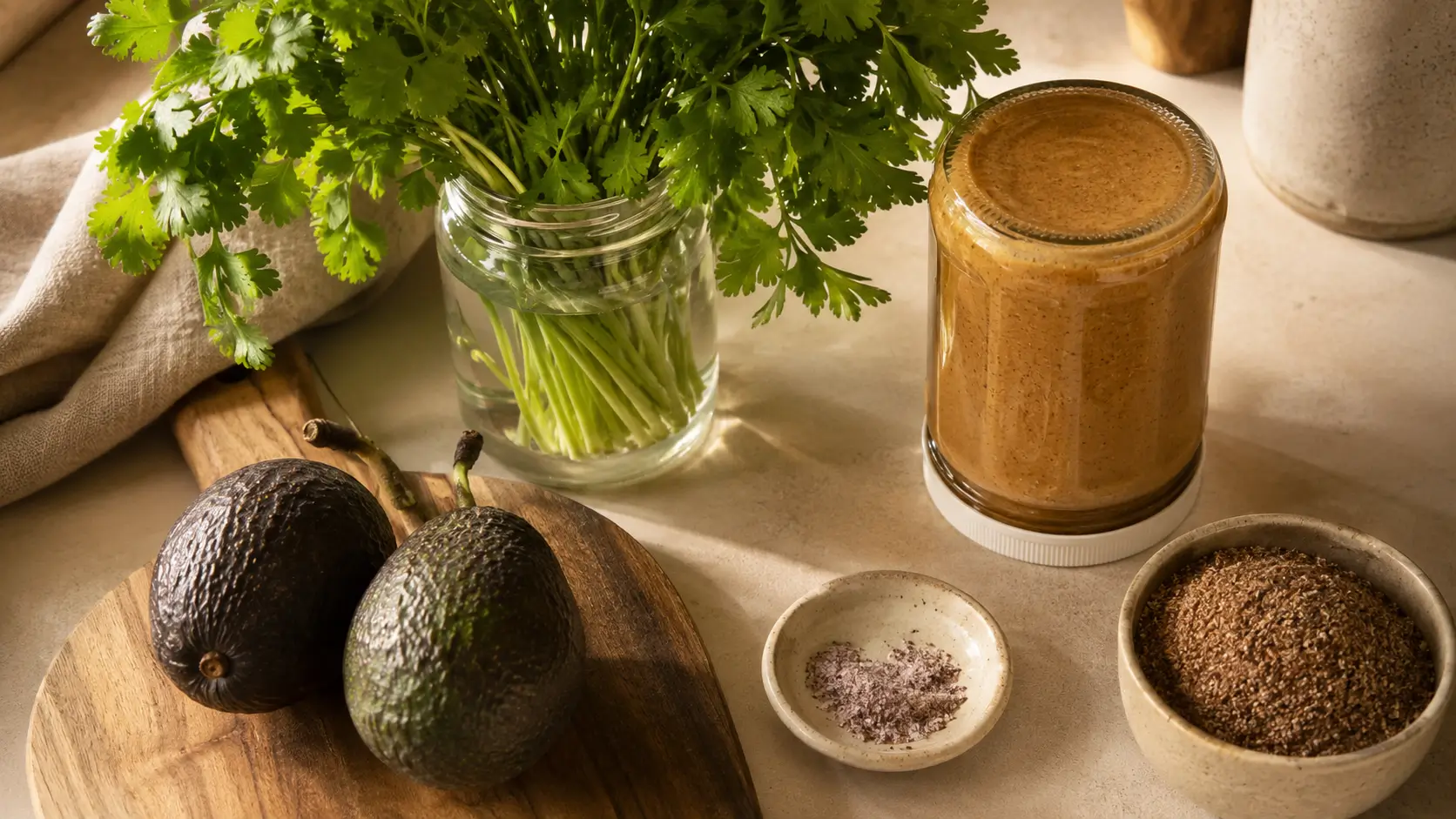
7. Avocado
Avocado is the one with the strongest single study behind it. In a small trial of 39 women, eating one fresh avocado a day for eight weeks measurably improved firmness and elasticity in the forehead skin.
Researchers tied that to the monounsaturated fats, vitamin E, and plant compounds inside. It is a pilot study, not a final verdict, but the direction is encouraging.
8. Carrots
Carrots deliver vitamin C plus beta-carotene, which your body converts into vitamin A as needed.
If you want more of that, think orange and yellow: pumpkin, squash, cantaloupe, papaya. The colour is the clue.
9. Berries
Strawberries, blueberries, blackberries. One cup of strawberries can clear your full day’s vitamin C, and the deep colour signals polyphenols.
Other richly pigmented foods sit in the same camp, pomegranate, red grapes, red cabbage. Eat the rainbow, especially the dark end of it.
The Habit Quietly Working Against All Nine
Here is what those food lists rarely mention. You can eat every item above and still hold your skin back if your diet runs high in sugar.
The mechanism has a name: glycation. When blood sugar stays elevated, sugar molecules latch onto the collagen and elastin that support your skin and cross-link the fibres, forming compounds called advanced glycation end products, fittingly shortened to AGEs.
Those cross-linked fibres lose their stretch. A 2024 review in Experimental Dermatology describes how AGEs stiffen collagen and elastin, drive inflammation, and chip away at the skin’s structure over time.
There is a hopeful flip side. Research summarised by dermatology reviews suggests that tighter control of blood sugar over about four months can cut the formation of glycated collagen by roughly a quarter.
So the vitamin C in your oranges builds collagen, and steadier sugar levels stop that collagen from being damaged. The two work as a pair.
There is a second, lesser-known lever, and it is about how you cook rather than only what you cook.
Dry, high-heat methods like frying, roasting, and grilling generate far more AGEs in food than gentle, water-based methods. Boiling, steaming, and stewing keep the load lower.
You do not need to give up roasted vegetables. Just balance them across the week with steamed and simmered dishes, and the everyday math tilts in your favour.
A Simple Way to Put It Together
If you want one takeaway you can act on this week, it is this. Add colour, steady the sugar, and lean on gentler cooking when you can.
Build plates around the nine foods above, especially the deeply coloured ones.
Cut back on soda, pastries, and ultra-processed snacks, the main drivers of glycation.
Steam or simmer more often, and save frying and charring for occasional meals.
Keep wearing SPF, because food supports your skin but never replaces sun protection.
Why This Fits a Plant-Based Plate So Easily
A diet built on whole plants tends to land in the skin-friendly zone almost by default. It runs higher in antioxidants and fibre and lower in the refined sugar that fuels glycation.
That overlap is part of a bigger pattern. Plant-based eating keeps showing up in research on slower aging, including work on plant-based diets and biological aging that we covered recently.
Your skin is the visible edge of that same story. What helps the cells underneath tends to show on the surface.
What I Keep Coming Back To
The thing I find reassuring about all this is how undramatic it is. No miracle serum, no ten-step routine.
Eat more colour, ease off the sugar, cook a little gentler. It is the kind of change that compounds quietly, and your skin is just one of the places it eventually shows.
If you have been curious about leaning further into plant-based eating, this is a soft place to begin. Our guide on how to start a vegan lifestyle without feeling overwhelmed walks through it gently, no pressure, just a first step whenever you are ready.