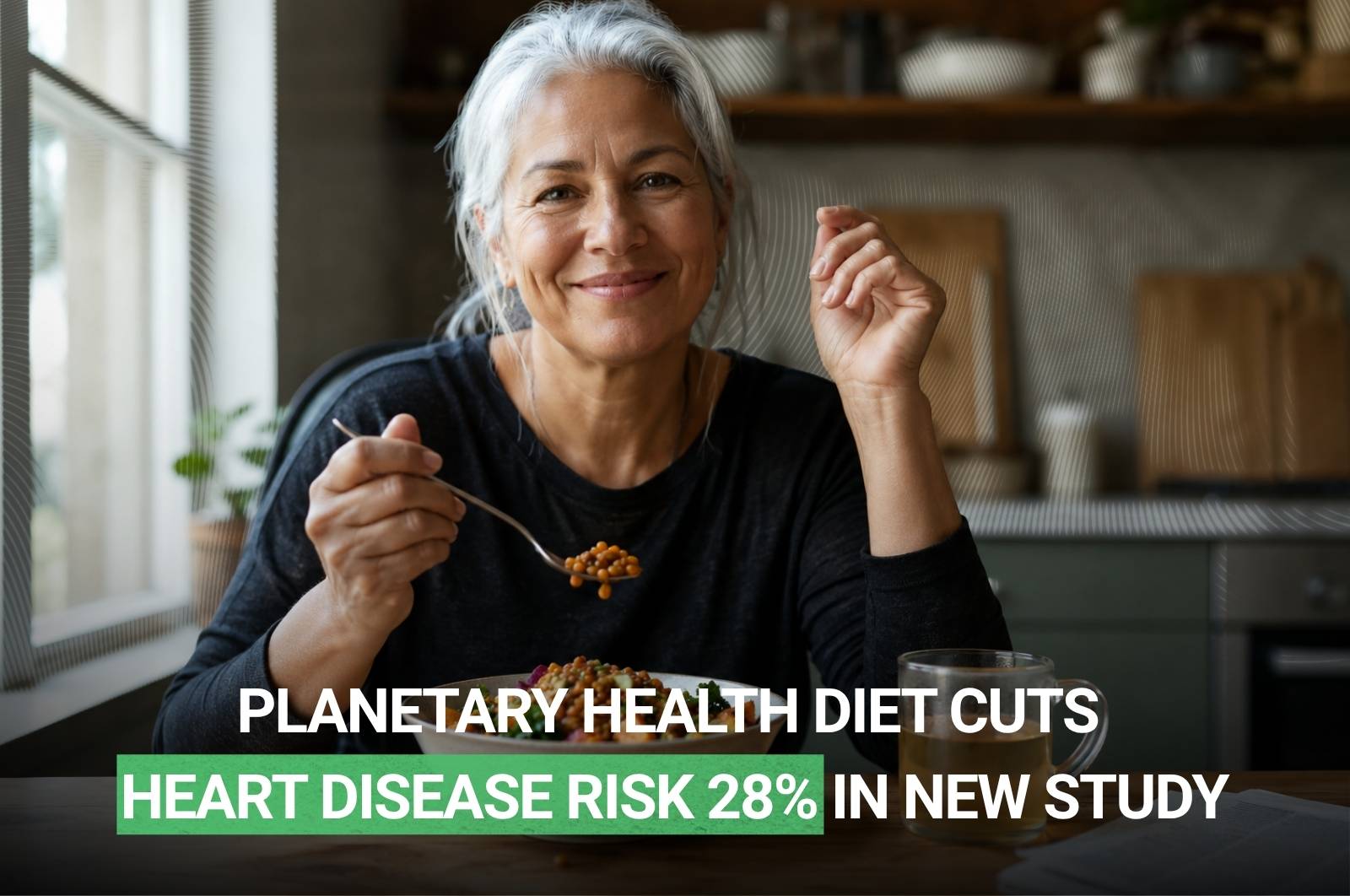
The country’s leading heart authority just quietly reversed 30 years of low-fat advice. For women in midlife, the new guidance changes almost everything.
In April 2026 the American Heart Association released its first major update to dietary guidance in five years.
Buried in the 78-page scientific statement was a finding that should have made front-page news everywhere.
The eating pattern most protective for women moving through menopause is a plant-forward one.
Not the low-fat, animal-protein-centred plan most primary care doctors have been recommending since the 1990s.
The statement, led by Alice Lichtenstein of Tufts and co-authored by Stanford’s Christopher Gardner, is a quiet reversal of decades of advice.
And for women in their 40s and 50s watching their cholesterol climb for the first time in their lives, it lands squarely in a very confusing moment.
What Actually Changed in the AHA’s 2026 Guidance
The old model was reductive. Count saturated fat, cap cholesterol, chase LDL numbers down with medication if diet did not do the job.
The 2026 statement drops that framing.
It now recommends thinking about overall dietary patterns, not isolated nutrients.
And it scores every major eating pattern against a fixed rubric.
The pescatarian pattern scored 92 percent. A healthy vegan pattern followed at 91 percent.
Mediterranean landed at 89, mostly because it allows moderate alcohol. Vegetarian scored 86.
What all four have in common is what matters.
They put legumes, nuts, seeds, whole grains, and vegetables in the centre of the plate. They push processed meat and refined grains out.
Coverage from the American Heart Association newsroom spelled out the nine core steps: adjust calories to maintain a healthy weight, eat plenty of vegetables and fruit, and prioritise plant-based protein sources like beans, lentils, nuts, and seeds.
Why Menopause Is the Moment This Matters Most
Cardiovascular disease is the leading cause of death for women in the United States.
And a woman’s risk profile shifts sharply the moment estrogen levels start to fall.
Brooke Aggarwal, an assistant professor of medical sciences at Columbia University Medical Center, framed it plainly in the AHA statement.
More American women are living longer, and a significant share of them will now spend up to 40 percent of their lives postmenopausal.
That is a lot of years to be at elevated cardiovascular risk.
And it is also, the AHA argues, a lot of years for daily food choices to add up.
The specific problems that appear at menopause, rising LDL, rising abdominal fat, insulin sensitivity slipping, blood pressure drifting upward, all respond well to a plant-forward pattern.
That is not a claim. It is what the pooled trial data actually shows.
What the “Best Diet for Menopause” Actually Looks Like on a Plate
The AHA guidance is deliberately not a meal plan. It is a pattern.
A day that fits the top-scoring pattern might look like this.
Oats with walnuts, berries, and ground flaxseed for breakfast. A lentil and roasted-vegetable bowl with olive oil and lemon for lunch.
Snacks of fruit and a handful of almonds. A dinner built around a whole grain, a legume, two or three vegetables, and a good olive oil.
No calorie counting. No banned foods. Small amounts of dairy or fish or eggs are permitted in the vegetarian and pescatarian versions of the pattern.
The statement does not say vegan is the single best diet. That is worth being honest about.
Gardner, who led the Stanford twin study on vegan diets in 2023, was direct about the reasoning.
All of the top-scoring patterns are, in his words, easier to follow long term than a strict vegan diet. And the AHA cares about what people can actually maintain for 20 or 30 years, not what tests best in a 12-week trial.
This is a fair caveat and it deserves a proper read.
A well-planned vegan diet was scored higher than Mediterranean on the AHA rubric. The reason it was not singled out as the top recommendation was practical, not clinical.
What This Guidance Does Not Cover
The 2026 statement is about cardiovascular risk.
It is not a menopause hormone replacement therapy guide. It does not replace medication where medication is warranted.
And it does not solve the very real problem that plant-based cooking, done badly, is boring.
Women in perimenopause and menopause who take this seriously will need recipes they actually want to eat.
That is the gap the AHA statement leaves open.
If you are ready to explore what a genuinely plant-forward routine looks like day to day, our free 7-day vegan meal plan is a good place to start.
It is built around the same food groups the AHA now recommends.
Where the Story Goes From Here
The AHA statement is one of the most-cited references clinicians reach for when writing dietary advice.
Its published position now sits in direct tension with a lot of routine primary care advice given to women approaching 50.
Expect the gap to close. It will take a few years.
In the meantime, women asking their doctors about diet at their next physical have a genuinely good piece of evidence to bring to the conversation.
A Quiet Moment
For years the mainstream advice for midlife women was to eat less, take a statin, and try to sleep better. What the AHA has just done is small on the surface and large underneath.
It has moved the country’s biggest heart-health authority into the same territory that plant-based eaters have been quietly occupying for decades.
If you are approaching menopause, or watching a woman you love move through it, this is a good moment to take a proper look at what is on the plate.
No pressure, no absolutism. Just an honest shift, backed by the strongest scientific statement the AHA has published in years.