
Lion’s Mane, Reishi, and the Functional Mushrooms Vegans Are Adding to Their Mornings
Functional mushrooms went from old herbalist remedy to coffee-bar staple in under a decade. The science is finally catching up.

For roughly 80 percent of postmenopausal women, hot flashes are a fact of daily life. A randomised trial from the Physicians Committee found a specific dietary combination that cut them dramatically. It is the third element that makes it work.
For roughly 80 percent of postmenopausal women, hot flashes are not a novelty.
They are the daily background noise of midlife, and for many they are debilitating enough that hormone replacement therapy starts to feel like the only viable answer.
The trouble is that hormone replacement carries its own long-running debate about breast cancer, cardiovascular events, and blood clot risk.
Millions of women arrive at menopause and find themselves navigating a real, evidence-informed trade-off with no clear winner.
A randomised trial called the Women's Study for the Alleviation of Vasomotor Symptoms (WAVS), published in the journal Menopause, tested a very different intervention: a specific dietary pattern, taken to completion, with no medication involved.
The result was one of the largest reductions in menopausal hot flashes ever reported from a non-pharmacological trial.
The intervention was simpler than the outcome suggests.
The research team, led by Dr. Neal Barnard, president of the Physicians Committee for Responsible Medicine, and Dr. Hana Kahleova, took 38 postmenopausal women reporting two or more hot flashes per day and randomly assigned them to one of two groups for 12 weeks.
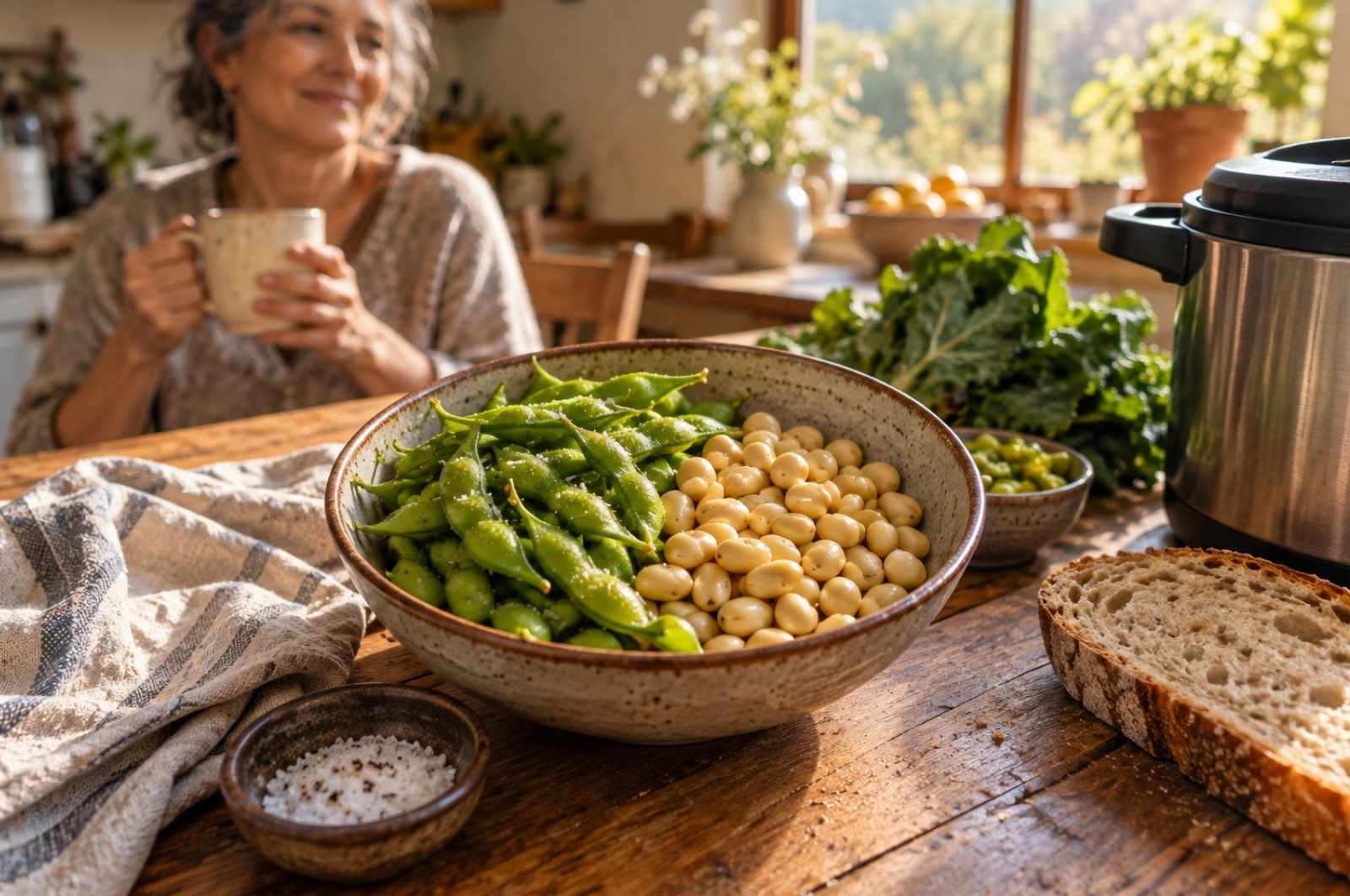
The intervention group followed a low-fat vegan diet plus a daily half cup of cooked whole soybeans. The control group made no dietary changes.
Both groups received a pressure cooker to prepare soybeans, and both had access to weekly Zoom check-ins.
The women in the intervention group tracked hot flashes in real time using a mobile app.
They also completed the Menopause Specific Quality of Life Questionnaire to catch changes in vasomotor, psychosocial, physical, and sexual symptoms.
By the end of the 12 weeks, the intervention group reported:
A follow-up phase, published in 2022, ran the same protocol with 84 women and found an 88 percent reduction in moderate-to-severe hot flashes, with a group average weight loss of eight pounds over the 12 weeks.
For context: hormone replacement therapy typically reduces hot flashes by around 70 to 90 percent. The dietary intervention landed inside that range, without the associated pharmacological risks.
This is the finding that reframes decades of nutrition advice.
Previous work on soy isoflavone extracts and soy foods like tofu or soy milk had shown only modest effects on hot flashes.
The WAVS trial explicitly tested a different question: what happens when whole soybeans sit inside a low-fat, fully plant-based dietary pattern?
The answer, in Dr. Barnard's framing, is that three elements seem to work together: cutting out animal products, reducing dietary fat, and adding a daily serving of whole soybeans. Isolated, each component moves the needle a little.
Combined, the effect multiplies.
A follow-up analysis in 2025 by the Menopause Society added a further wrinkle: processing level did not seem to change the outcome.
Whether soybeans were consumed as edamame, cooked whole soybeans in soup, or as tofu inside a broader plant-based pattern, the effect held.
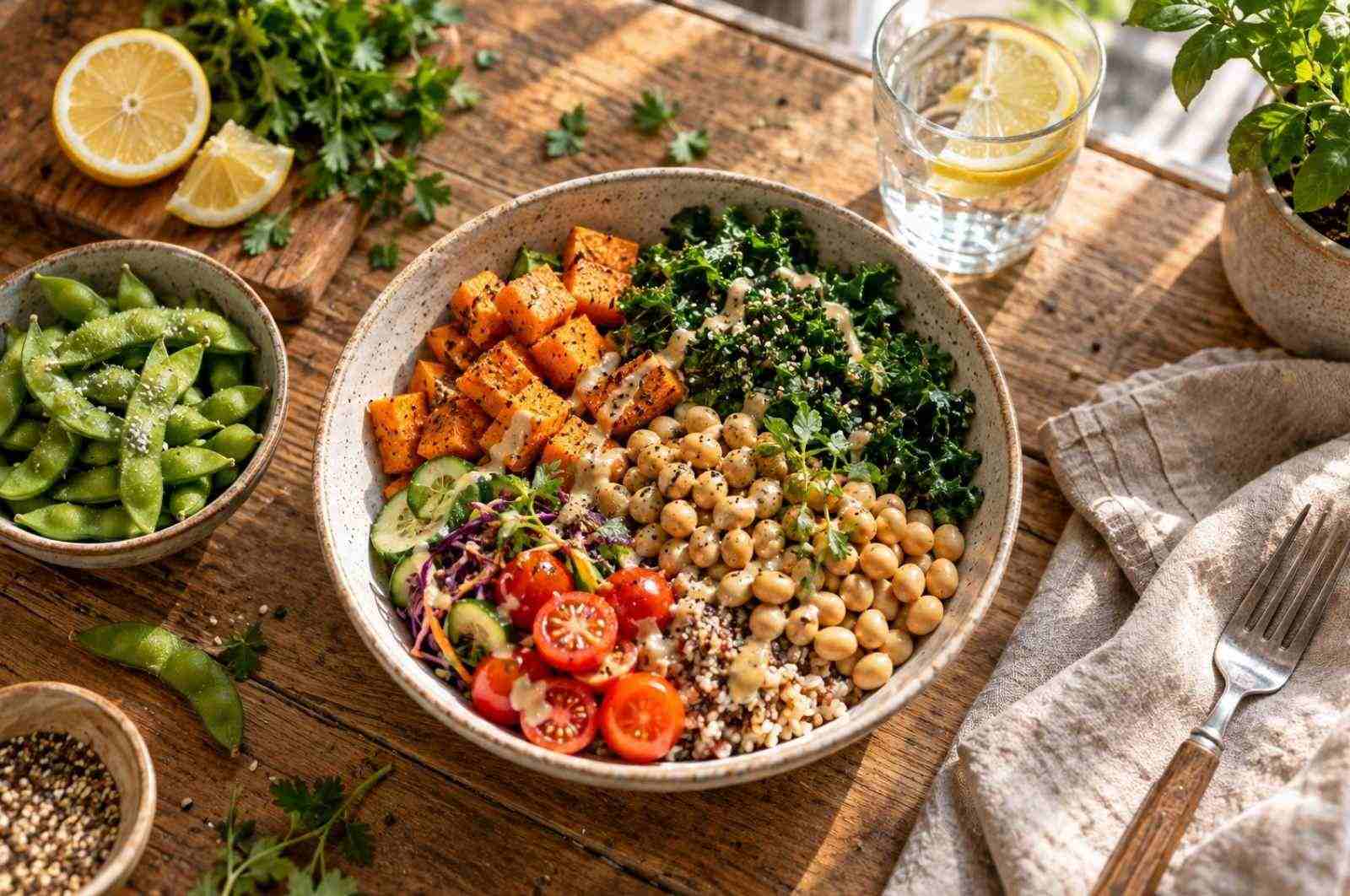
The intervention was structured but not exotic. Participants ate the sort of food you can buy anywhere:
Barnard noted in an interview with Forks Over Knives that soaked and dry-roasted soybeans, baked for 45 minutes with a little spice, "roast up really nicely, like dry-roasted peanuts." That is the culinary reality of the intervention: not medicinal, not miserable, just food.
One reason the WAVS findings held up to scrutiny is that they mirror a much older observational pattern.
In regions where diets are historically low in fat and high in whole soy foods, notably pre-Westernised Japan and the modern-day Yucatán Peninsula, postmenopausal women report substantially fewer vasomotor symptoms.
Whether the reason is soy, low fat, absence of processed animal products, or the combination has never been resolved by the observational literature.
The WAVS trial is, essentially, an attempt to test that combined hypothesis directly.
And it produced results consistent with what the population data has been suggesting for decades.
This is not a small point, so we will state it plainly.
The WAVS trials were funded and conducted by the Physicians Committee for Responsible Medicine, a nonprofit whose stated position is that plant-based diets prevent and treat disease.
That is not a fatal conflict, but a reader deserves to know it.
The sample sizes (38 in the first trial, 84 in the second) are small by pharmaceutical standards. The 12-week duration is short.
And the findings apply specifically to postmenopausal women experiencing two or more hot flashes per day; whether the same protocol works for perimenopausal women in the years leading up to menopause remains untested here.
The Menopause Society, an independent professional body, published its own commentary in 2025 pointing out that even a fully processed vegan diet appeared to yield similar hot flash relief in follow-up analyses, so long as whole soybeans were part of it.
That is a reassuring convergent signal from a third party.
For a woman experiencing hot flashes and weighing whether hormone therapy is her only option, the trial's design offers a concrete alternative worth testing for 12 weeks.
The intervention was:
That is essentially it. No supplements were required.
No hormone testing. No specialist referrals. Which is worth pausing on, because that is a rare set of conditions in current clinical care for menopause.
Any woman with existing medical conditions, on medications, or on hormone therapy should speak with her doctor before making a substantial dietary change.
But the barrier to running this particular experiment at home is unusually low.
For women who have already moved partway toward plant-based eating, our earlier deep-read on the 20-year study of 65,000 women and heart disease is a useful companion, because it shows that the same dietary pattern also has a substantial protective effect on cardiovascular risk, which itself rises after menopause.
What we find worth naming is not the 84 percent figure. Impressive as it is, no single trial deserves that much weight.
What is worth naming is that the intervention is cheap, food-based, and asks nothing that a person cannot do at home.
That is genuinely rare in menopause care. Most of the current conversation is about which pharmaceutical to take and at what dose.
This trial is not saying pharmaceuticals are wrong. It is saying there is a lower-cost, lower-risk protocol that appears to work at a comparable magnitude, and it deserves to be part of the conversation.
If you have been quietly wondering whether food might help, our free 7-day vegan meal plan is a low-pressure way to see what a plant-based week actually looks like, with the sort of soybean-rich meals the WAVS diet was built around.
Twelve weeks is where the trial data lives. One week is where any real change begins.
Grocery list included!
No spam. Cancel anytime.