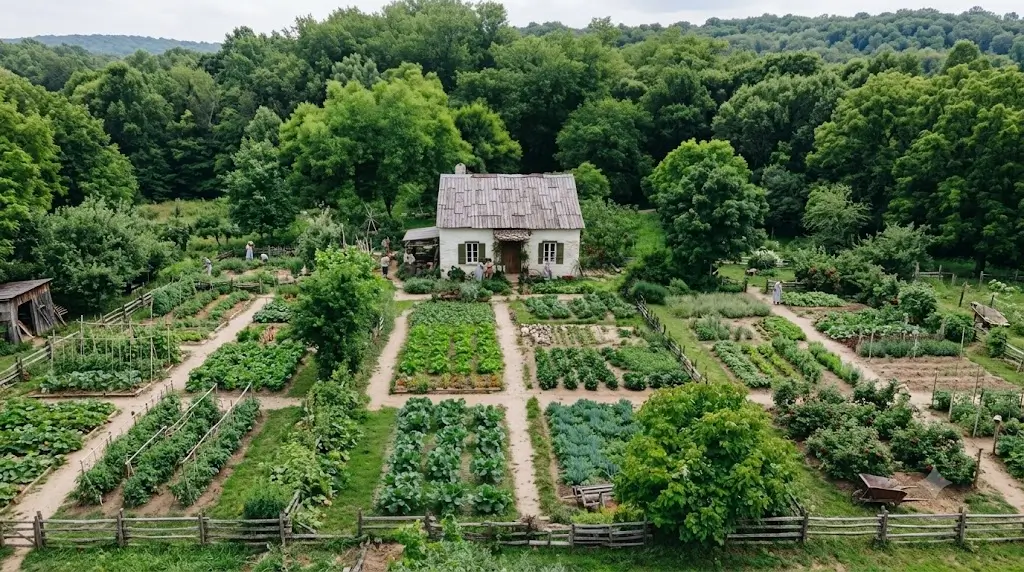
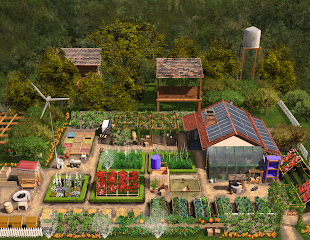
The catch is that almost every self‑sufficient homestead you see online quietly buys in feed, grain, or hay.
The quarter‑acre self‑sufficient homestead is one of the most repeated ideas in the modern back‑to‑the‑land movement. It is also, if you look closely, one of the most misleading.
The core claim is real. A plant‑based adult with a well‑designed quarter‑acre lot can grow the majority of their calories at home, especially with good soil, a temperate climate, and honest work through spring and summer.
The University of California’s cooperative extension has been writing about this for decades. Small Footprint Family’s long guide on the topic puts it plainly: a family committed to a plant‑forward diet can come close to self‑sufficiency on a quarter acre.
The catch is what the popular version of the story leaves out.
Most homesteads that look self‑sufficient online are quietly buying in feed for chickens, hay for goats, and grain for pigs.
When those hidden inputs get counted, the acreage picture changes fast.
The single biggest variable in how much land you actually need is what you plan to eat.
A standard American diet, heavy in meat and dairy, requires roughly 2.67 acres of agricultural land per person per year, according to figures compiled by Small Footprint Family.
Most of that is not growing food you’d actually eat. It is growing grain to feed livestock.
A plant‑based diet built around vegetables, legumes, whole grains, and fruit needs roughly one‑eighth of that at industrial scale.
That same ratio holds, roughly, at the backyard scale. A vegan diet can be sustained on about 0.4 acres per person, according to a case study run by Self Sufficient Homesteading.
A meat‑heavy homestead can’t close the loop on much less than two to three acres per person, and only if the land is fertile enough to graze cattle without buying hay through winter.
So a quarter acre for one plant‑based adult is genuinely close to workable.
For a family of four eating the same way, it becomes tight but not impossible, especially if the calorie crops are chosen carefully.
Why Calorie Crops Are The Whole Game
A garden full of kale, lettuce, and cherry tomatoes will not feed anyone through February. This is where most first‑year gardeners get stung.
Leafy greens and salad vegetables are nutritionally dense but calorically thin. Real food self‑sufficiency requires serious space for calorie‑dense, storable crops: potatoes, sweet potatoes, dry beans, winter squash, and grains where possible.
Those are the crops that actually keep a person fed once the growing season ends.
A rough working split for a quarter‑acre plant‑based homestead looks something like this. Roughly half the growing space goes to calorie and storage crops.
quarter goes to protein crops, mostly dry beans and lentils. The rest goes to vegetables, herbs, and berry bushes.
Fruit and nut trees, if the climate allows, sit along the perimeter where they don’t shade the main beds.
Their winter storage system relies on potatoes, thick‑skinned squash, and preserved apples, not fresh greens.
The Preservation Problem Nobody Warns You About
Growing enough food is one problem. Keeping it edible through winter is a separate one, and the second one is often harder.
A productive quarter‑acre garden combined with no preservation plan feeds a family until roughly October. After that, everything either gets eaten fast or turns to compost.
The homesteads that actually make it through winter run some combination of canning, lacto‑fermentation, root cellaring, dehydrating, and freezing.
That means the physical setup matters as much as the plant list. A basement corner cool enough to store potatoes and squash. A pressure canner or a chest freezer.
A dehydrator or a solar dryer for tomatoes and herbs. Fermentation crocks for cabbage, cucumbers, and hot peppers.
None of those things are luxuries if the goal is genuine year‑round self‑sufficiency.
Fresh herbs are where a supermarket‑dependent kitchen bleeds the most money and the most plastic.
The Animal‑Free Homestead Advantage
One of the quiet advantages of a plant‑based homestead is that it removes a whole category of daily labor and a large chunk of the land requirement.
A dairy cow producing two gallons of milk daily needs roughly an acre of grazing land under conventional management, plus stored hay for winter.
Two dairy goats need a similar footprint. Even 15 laying hens, on a well‑run backyard setup, generally take about 400 square feet and rely on bought feed unless there is grain being grown on‑site.
When those animals come out of the picture, the numbers shift. A quarter‑acre plant‑based lot has more usable growing space than a quarter‑acre mixed homestead, because there are no coops, no pens, no pastures.
That extra space usually gets converted to more calorie crops or a small food forest of fruit and nut trees.
Helen and Scott Nearing, often called the great‑grandparents of the modern back‑to‑the‑land movement, ran an animal‑free homestead from 1932 onward.
Their book The Good Life documented sixty years of self‑sufficient living without meat or dairy.
The playbook is old. It just gets less airtime than the chicken‑and‑goat version.
What A Realistic First Year Looks Like
For anyone starting from a bare quarter‑acre lot, the honest first‑year plan looks a lot less romantic than the YouTube version.
Year one is mostly about soil and infrastructure. Getting compost systems running. Building raised beds or clearing sod.
Testing what actually grows in the local climate.
A first‑year garden that produces summer salads and a decent tomato crop is a success, not a failure.
By year three, the same lot can genuinely produce most of a plant‑based adult’s calories.
That is the pattern that shows up in almost every serious homesteading account.
The people writing about self‑sufficiency on quarter‑acre lots have usually been on that land for five to ten years.
The things that separate a working quarter‑acre from a struggling one, in rough order of importance, are these:
Soil quality. Everything else is downstream. First‑year homesteads on depleted lawns typically underperform for two or three seasons while the soil recovers.
Water access. Rainwater capture, drip irrigation, or a working well makes the difference between a productive August and a burnt one.
Storage crops chosen for the climate. Sweet potatoes carry a Southern homestead. Winter squash carries a Northern one. Dry beans carry both.
Preservation infrastructure. Canner, dehydrator, freezer, or root cellar. Without at least one, October ends the food supply.
Time. Roughly 15 to 25 hours a week during peak season, and less through winter. A quarter‑acre homestead is not a hobby garden.
⭐ 4.9/5 Rated by 10,000+ Vegans
How to Become Self-Sufficient on ¼ Acre
The only book you need to become self-sufficient on ¼ acre, now available for our readers.
Almost every self‑sufficient homestead account leaves out the same category of expense: staples that don’t grow well at small scale. Salt. Cooking oil. Grain, unless you have space and equipment for it.
Coffee, tea, chocolate, spices, citrus if you’re not in the right climate.
The 95 percent self‑sufficient homestead is a real target.
The 100 percent one is mostly a marketing story. Even the most experienced growers on quarter‑acre lots quietly buy grain, salt, and oil, and treat the rest as a bonus.
That doesn’t make the project less worth doing. It just makes it worth being honest about.
Where This Fits In A Plant‑Based Life
For readers already eating plant‑based, growing even a small share of your own food shifts the relationship with the grocery store in a way that is hard to describe until it happens.
The tomato you picked at breakfast tastes different from the one that flew in from Mexico.
The dry beans you stored yourself cook slightly differently from the bag on the shelf.
None of that requires a full quarter acre.
A small raised bed, a container garden of herbs, a few pots of leafy greens on a balcony, or even a shared community plot can move the needle.