Dr. Joe Crowe was 44, fit, and had a cholesterol reading his cardiologist called reassuring. Then, on a Friday afternoon in Cleveland, his heart nearly killed him. Here is what he did next.
It was a Friday afternoon in November 1996. Dr. Joe Crowe finished his last operation of the day at the Cleveland Clinic, said goodbye to his patient, and felt a headache hit him in a flash.
A minute later the chest pain started. It radiated up his arm and shoulder and into his jaw.
He was 44 years old. His cholesterol was 156 mg/dL, which is well inside the range most cardiologists would call reassuring. He was not overweight.
He was not diabetic.
He was not hypertensive. He exercised. He had no family history of heart disease.
He was also, as of that Friday afternoon, in the middle of a heart attack.
What Happened Next Is the Part Nobody Expects
Dr. Crowe was the surgeon who had succeeded Dr. Caldwell Esselstyn as chairman of the breast cancer task force at the Cleveland Clinic.
The two men knew each other well. Esselstyn had spent the previous decade running a small, tightly controlled study of severe coronary artery disease patients on a whole-food, plant-based, oil-free diet. Crowe knew what Esselstyn was doing.
He also knew what statins were, and what the standard of care after a heart attack looked like.
He chose the diet.
In an interview years later, Esselstyn described the conversation. Crowe told him he did not trust statins, that he was aware of the side effect profile, and that if there was a nutritional path he wanted to try that first. Esselstyn wrote him into the protocol.
The Protocol, in the Plainest Language Possible
Esselstyn’s intervention is not a lifestyle. It is a therapeutic diet.
The rules are strict and they exist because the mechanism they target, endothelial dysfunction in the arteries feeding the heart, does not respond to compromise.
- No meat. No poultry. No fish. No dairy. No eggs.
- No added oil of any kind. Not olive, not coconut, not avocado. Fat, even from healthy plant sources, blunts endothelial function.
- No refined sugars, no refined flours, no processed foods carrying either.
- No caffeine. No excess sodium.
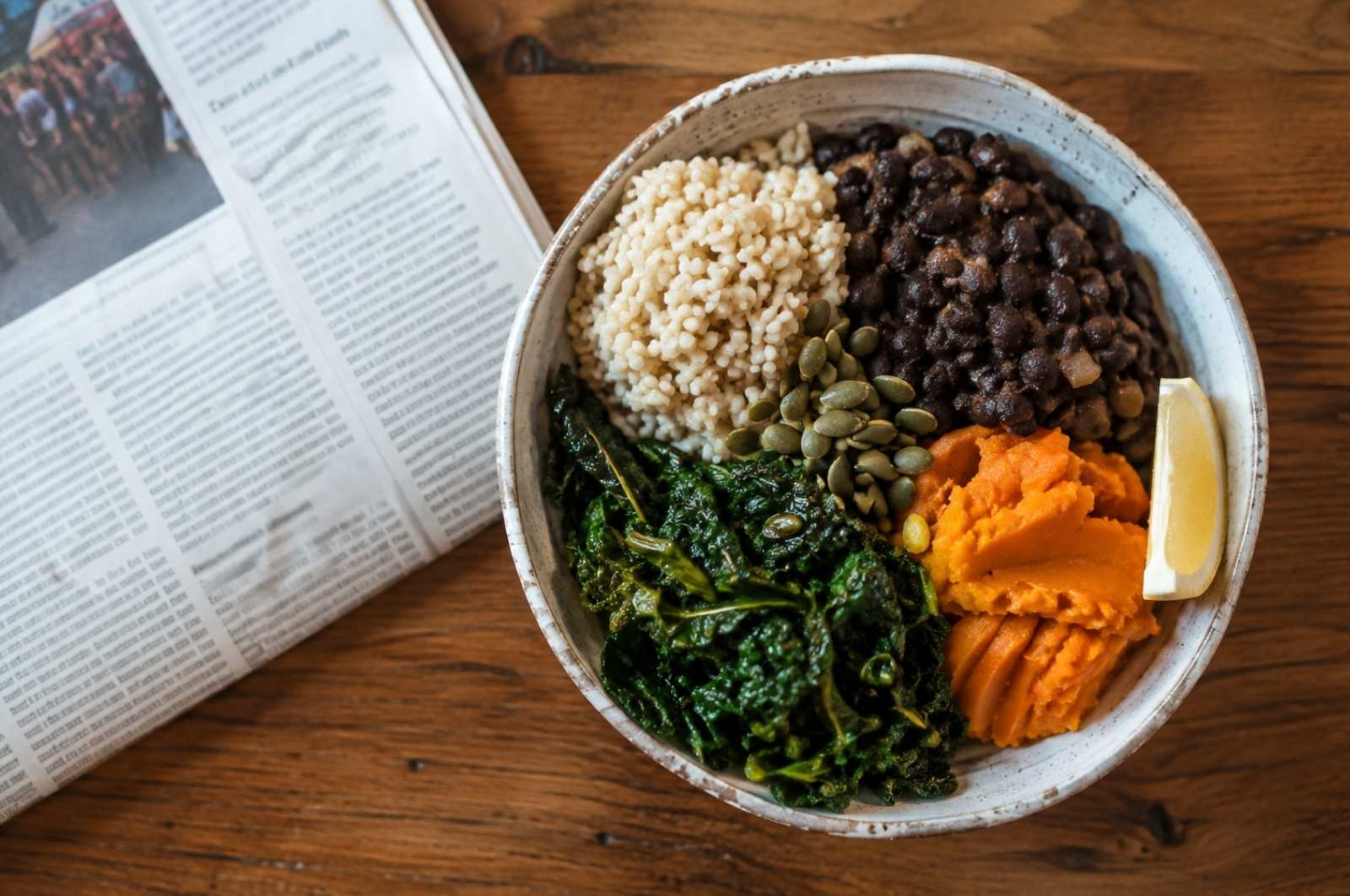
- The whole diet is built from whole grains, legumes, vegetables (with dark leafy greens six times a day, minimum), fruit, and small amounts of nuts and seeds for patients without established coronary disease.
This is not a Mediterranean diet. It is not a plant-based diet in the loose sense the phrase is often used.
It is a specific, published, therapeutic protocol used at the Cleveland Clinic for patients with established coronary artery disease.
Crowe followed it, in Esselstyn’s words, as “the absolute personification of commitment.”
Two and a Half Years Later
Crowe went in for a follow-up angiogram. Esselstyn saw the images the same morning. He walked to Crowe’s office at lunchtime. Crowe was sitting behind his desk. Esselstyn asked how he thought they were doing.
The angiograms, published in Esselstyn’s book and reprinted in cardiology conference presentations for the following two decades, showed something the Cleveland Clinic radiologists had rarely, if ever, seen. The blockage that had caused the November 1996 heart attack was gone. Not reduced. Gone. Esselstyn described it as “the most complete resolution of coronary artery disease” he had ever seen. That is a case report, and case reports are the weakest form of medical evidence. But it is not the only one. Esselstyn’s 12-year study of 24 patients with severe, angiographically-documented coronary artery disease produced average total cholesterol drops from 237 mg/dL to 137 mg/dL, disease regression in 8 of the 11 who completed follow-up imaging, and, across the full adherent group, zero recurrent cardiac events. Five of the 24 patients had been told by cardiologists that they had less than a year to live. Twelve years later they were still symptom-free.
Why This Story Almost Never Gets Told Correctly
There are two ways to mishandle a story like Crowe’s.
The first is to treat it as proof that diet cures heart disease. It is not proof. It is a case report inside a small, uncontrolled study of highly adherent patients whose care included, in some cases, cholesterol-lowering medication in the earliest phase.
The mainstream cardiology community has been fair in pointing this out, and any honest telling of the story has to concede the point.
The second, and more common, mishandling is to dismiss it. The Esselstyn cohort included patients written off by cardiologists as having a year to live. Twelve years later they were still walking around.
That is not nothing, and it is not a coincidence, and pretending otherwise is its own form of intellectual dishonesty.
The honest reading sits between the two.
There is a therapeutic diet, published in peer-reviewed cardiology journals, that has produced repeated angiographic reversal in patients with severe coronary disease. It is not a mainstream first-line treatment.
It requires the kind of adherence most patients cannot sustain. And when patients do sustain it, the results are the results.
What This Means for People Who Have Not Had a Heart Attack
The Esselstyn protocol is designed for patients with established coronary disease.
It is not designed for the general population, and following it strictly is not necessary for someone with a healthy heart at 30. That distinction matters.
But the direction of the protocol, whole plants, minimal added fat, no processed food, and the emphasis on daily dark leafy greens, is not controversial.
The French Lancet analysis we covered earlier this year found the same thing at population scale. Whole-food plant patterns cut cardiovascular risk substantially. Ultra-processed plant patterns did not. The daily levers a person can actually pull, without becoming a Cleveland Clinic case study, are consistent across every large plant-based cohort:
- Beans, lentils, or chickpeas at least once a day. Ideally twice.
- Dark leafy greens on the plate at least once a day. Kale, spinach, chard, spring greens, collards.
- Whole grains as the default starch. Oats, brown rice, barley, whole-wheat bread, buckwheat, quinoa.
- Nuts and seeds daily, in modest amounts.
- Ultra-processed foods, including plant-based ultra-processed foods, kept as an occasional treat rather than the base of the diet.
That is not the Esselstyn protocol.
But it is the direction it points in, and it is the direction the strongest population-level evidence points in too.
What Happened to Joe Crowe
Dr. Crowe continued to follow the diet for the rest of his career. He stayed on the protocol. He remained free of recurrent cardiac events.
His original angiogram, taken after the November 1996 heart attack, and his follow-up angiogram two and a half years later, are printed as Figure 1 in the insert of Esselstyn’s book Prevent and Reverse Heart Disease.
They are two of the most reproduced images in the plant-based cardiology literature. Anyone can look at them.
The medical establishment did not, and still has not, adopted the Esselstyn protocol as standard of care. Statins remain first-line.
Bypass grafting and stents remain the interventional standard for acute events. That is the state of the guideline.
But quietly, in cardiology clinics across the US and UK, doctors have started handing patients Esselstyn’s book and asking them to try. The Cleveland Clinic runs the program publicly. Over 1,000 patients have gone through it. Our Take
The reason Crowe’s story matters is not because it is a miracle. It is because it is not. He was a doctor. He read the evidence in front of him.
He picked, from among the options his colleagues were offering, the one that gave him the most control over his own outcome.
Then he did the work.
The diet is hard. The adherence is real. And the payoff, when it comes, is what it looked like on Crowe’s follow-up angiogram: a clean vessel where a blockage used to be, and a career that continued for another two decades instead of ending on a Friday afternoon at 44.
That is not a story about veganism as identity. It is a story about veganism as medicine, for a specific condition, at a specific dose.
Anyone who has watched a parent, a partner, or a colleague come home from a cardiologist’s appointment with a fistful of new prescriptions deserves to know that a documented case series exists in which a strict plant-based diet did what those prescriptions are trying to do, and in some patients did it better.
If You Want to Read Further
It is not the Esselstyn protocol. It is a doorway toward a version of eating that has, in enough case reports and enough population studies, moved arteries in the right direction.