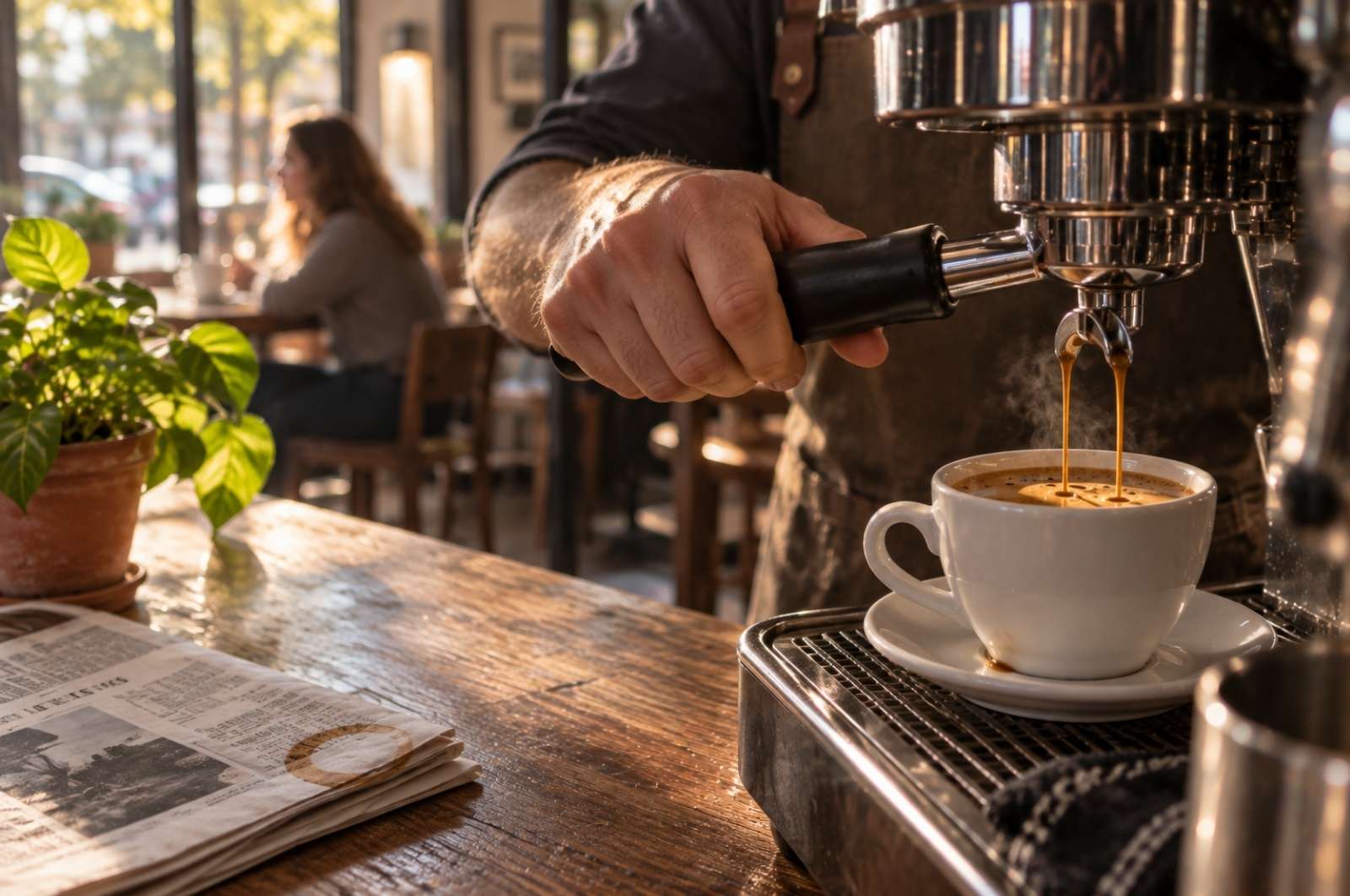
For roughly two years, one piece of caffeine advice has been repeated everywhere: wait 90 minutes after waking before your first cup.
For roughly two years, one piece of caffeine advice has been repeated on every wellness feed on the internet: wait 90 minutes after waking before your first cup of coffee. The reason given is always the same. Cortisol.
The advice is half right. And the half that is missing turns out to matter more.
What the Cortisol Argument Actually Says
In the first 30 to 45 minutes after you wake up, your cortisol levels do a thing called the Cortisol Awakening Response, or CAR. Cortisol jumps by roughly 38 to 75 percent above your baseline, peaking around the 30 to 45-minute mark, then drifts back down over the rest of the morning.
Cortisol is not the villain the wellness feeds have painted it as. Its whole job at that moment is to wake you up and make your brain sharp and your body ready for the day.
Every healthy adult with a normal sleep-wake pattern has a CAR. A flat, blunted CAR is actually associated with worse outcomes across a range of conditions.
The theory the 90-minute rule is built on says this: if you drink caffeine during the peak of your CAR, you are stacking a stimulant on top of a hormone that is already spiking.
Do that every morning for months and years, and you may build a tolerance to caffeine while also gently over-taxing your stress system.
Wait until cortisol starts falling, roughly around the 90-minute mark, and your first cup lands cleanly on the descent.
This is the version most sources will give you, including a recent systemic review on caffeine and sleep that anchors the theory in the circadian rhythm literature.
Kiran Campbell, RDN, has laid it out in the same shape: cortisol peaks minutes before you wake up, then again around 30 to 45 minutes after, and "waiting two to three hours after waking up would seem to be the best time to drink coffee."
So far, so aligned with the viral advice.
What the Newer Research on Regular Drinkers Says
Here is the piece that gets left out.
Almost all of the strong cortisol-spike-from-morning-coffee findings come from studies on people who are not habitual coffee drinkers, or who have been asked to abstain for a few days before the test.
Those participants absolutely do show a sharp cortisol response when they drink coffee in the morning.
But for regular daily drinkers, the story is different.
A classic study by Lovallo and colleagues, published in Psychosomatic Medicine, found that habitual coffee drinkers develop a partial tolerance. The morning cortisol response to a cup is significantly blunted in people who drink coffee daily.
Not eliminated. But blunted enough that the 90-minute rule turns out to matter less than the internet has been implying for anyone whose coffee habit is stable and consistent.
A separate, more recent review, summarized on The Conversation by a University of Edinburgh researcher in July 2026, went further. In habitual drinkers, morning caffeine was not shown to meaningfully disturb the cortisol rhythm at all.
What did consistently drive up cortisol was drinking coffee later in the afternoon.
That is the sentence to notice.
So What Should You Actually Do?
The updated version of the timing advice, once you fold in what the habitual-drinker studies show, looks something like this.
If You Drink Coffee Daily and Feel Fine
You are almost certainly getting less cortisol lift from your morning cup than the wellness feeds are implying.
Waiting 30 to 60 minutes after waking is still a reasonable habit if you want the caffeine to line up with a cleaner rhythm, but the 90-minute rule is not the difference between health and harm.
Your habituation has taken the edge off the acute response already.
The more important lever, in your case, is when your last cup of the day lands.
If You Drink Coffee Occasionally, or You Are Coming Back From a Break
Here the 90-minute rule is worth respecting. Your body has lost the tolerance and your acute cortisol response to a strong dose will be closer to the numbers in the studies that first inspired the advice.
Wait, ideally, until 60 to 90 minutes after you are up.
The Rule That Matters More: The Cutoff
Caffeine has a half-life of roughly five hours. That means a 2pm coffee is still leaving a fifth of its caffeine in your bloodstream at bedtime, and a 3pm coffee is worse. The systematic review Campbell cites concluded that caffeine should be avoided for at least 8.8 hours before bed. Do the math against your bedtime. If you sleep at 11pm, your last coffee is around 2:15pm at the latest, ideally earlier.
The published sleep data behind that number is not small. Caffeine reduces total sleep time by around 45 minutes and drops sleep efficiency by about seven percent, even in people who insist it does not affect them. Your subjective I sleep fine is often the caffeine talking.
The Second Timing Rule Nobody Uses
There is one more lever that is not about the clock at all. It is about what is in your stomach.
Drinking coffee on a completely empty stomach speeds gastric emptying and delivers caffeine to your bloodstream faster and more sharply. That is the peak that anxious or caffeine-sensitive people notice as jitters, a heart-rate bump, or an acid-reflux flare.
Drinking coffee during or right after a meal, ideally a low-fat, low-sodium one, does the opposite. Absorption slows. The caffeine peaks lower and lasts longer. The subjective experience is a smoother lift and fewer side effects.
Campbell's practical take: "Adding coffee during or immediately following your meal will allow slower gastric emptying, meaning slower absorption and metabolism of the caffeine. This may prevent any negative side effects one may experience from caffeine consumption."
This is the fix if you have been getting anxious or shaky mornings from coffee. Move it to after breakfast, not before.
One More Reason Not to Skip Your Cup
Coffee is not just caffeine. Whole coffee, in reasonable amounts, is one of the most polyphenol-rich things most people drink, which is why observational research keeps finding it associated with lower risks across a surprising range of conditions.
Coffee compounds have been linked to a reduced risk of prostate, liver, head-and-neck, and endometrial cancers, according to City of Hope, a National Cancer Institute-designated cancer center. A 2024 study funded by the World Cancer Research Fund found that people with bowel cancer who drank two to four cups a day were less likely to experience a recurrence.
Those are associations, not causal claims.
But they are consistent enough, across enough independent research groups, that the drink less coffee framing has quietly aged badly.
For most healthy adults, the question is not whether to drink coffee. It is when.
The Whole Rule, In One Sentence
If you already drink coffee daily, put the first cup wherever it fits your morning, ideally with or just after food, and be strict about your afternoon cutoff.
That is the practical version of everything the research is saying. The viral 90-minute rule, on its own, is missing the more important half of the picture, which is the afternoon and the empty stomach.