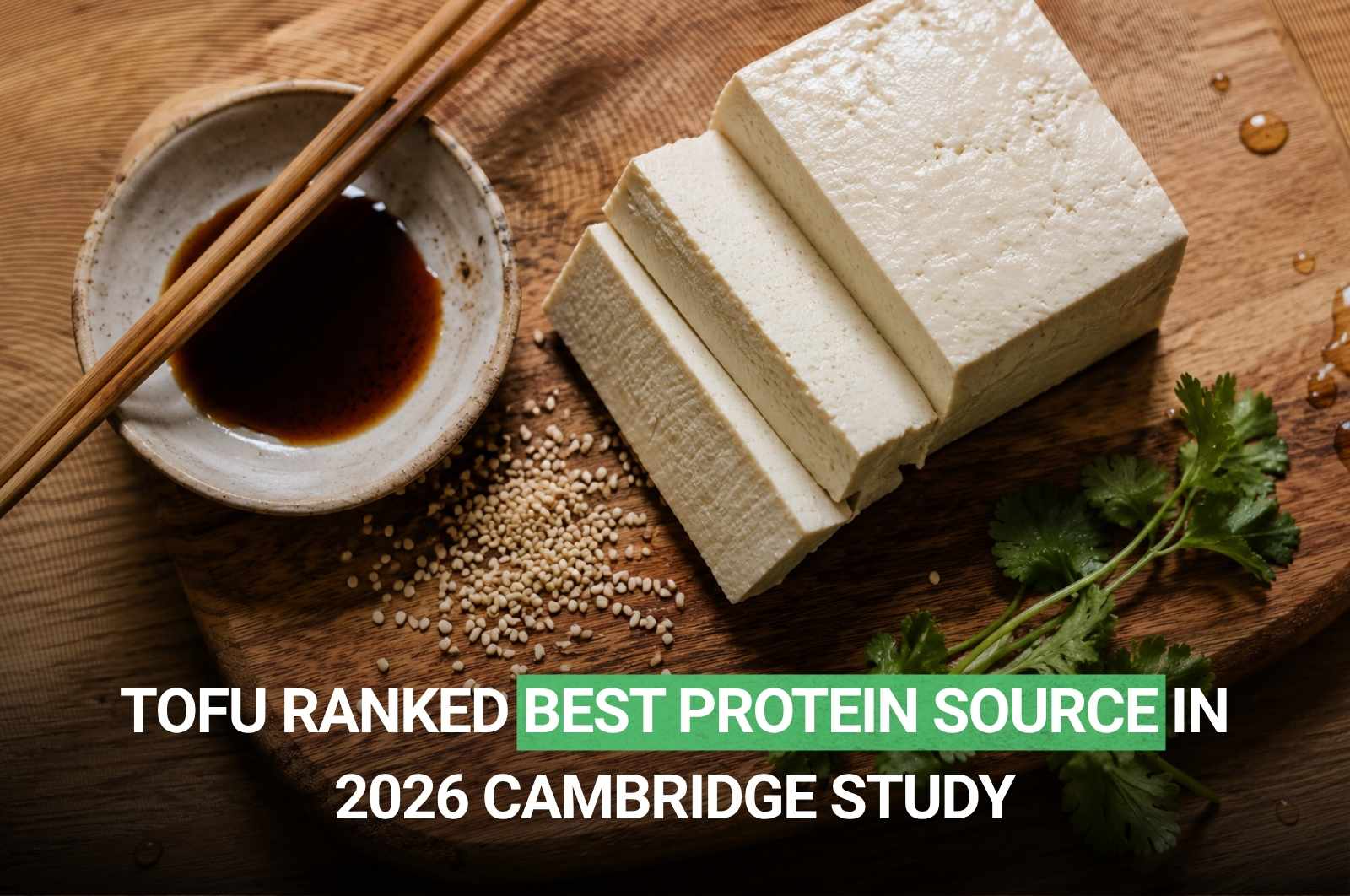
Dr. Chris Macdonald’s Better Protein Institute Score judged 20 foods on nutrition, environment, and cost at the same time.
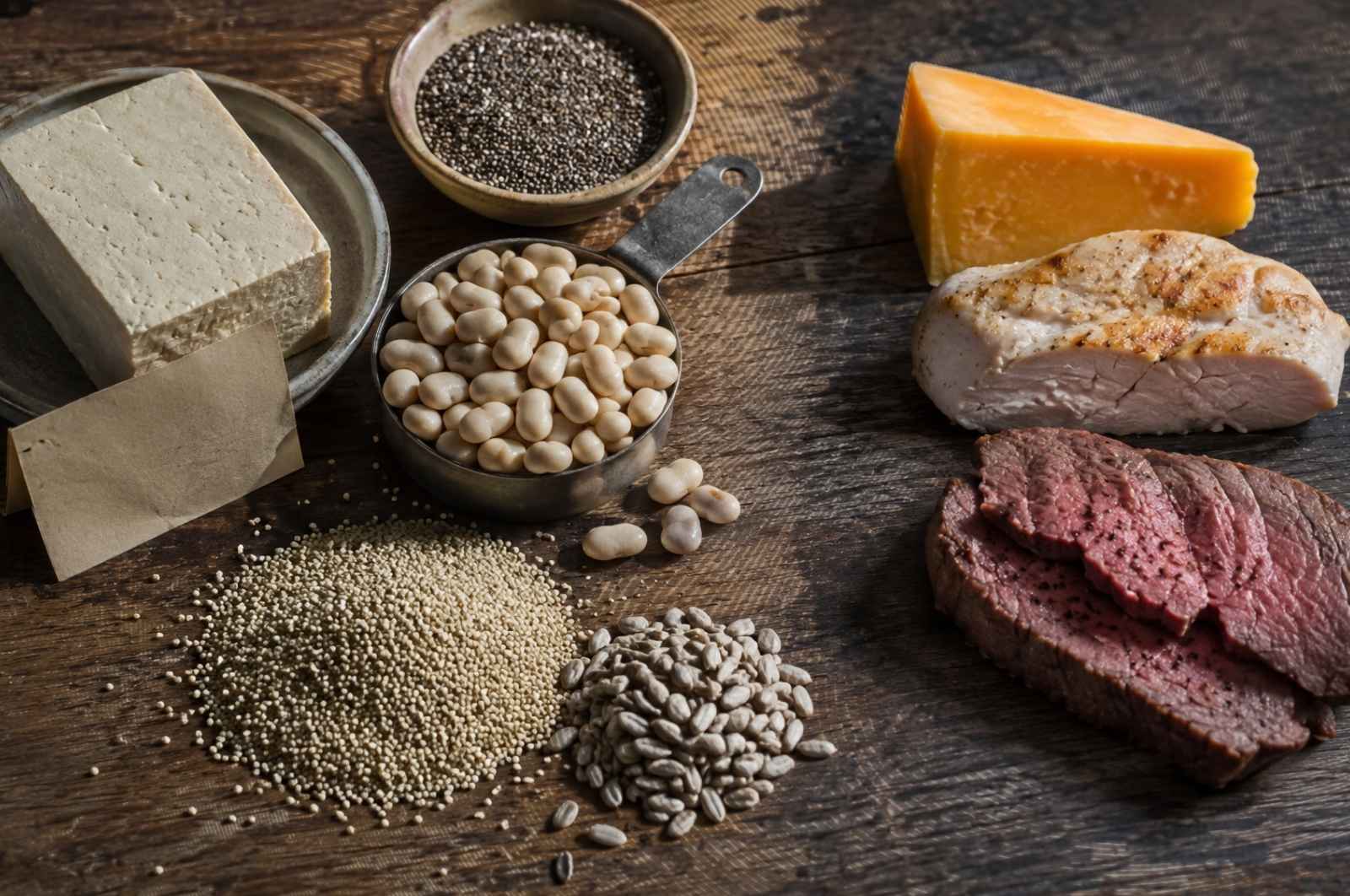
Tofu came out at number one. Chia seeds, beans, and quinoa filled the rest of the top four. Every food in the top 20 percent of the ranking was plant-based.
At the bottom of the list, in order: mozzarella, lamb, beef, and cheddar. Cheddar received the lowest overall score of any food tested.
That is the finding from a new study published this August in Frontiers in Sustainable Food Systems, developed by Dr. Chris Macdonald, a behavioural scientist at the University of Cambridge and director of the Better Protein Institute. His paper introduces the first version of what he calls the BPI Score, a way of judging protein sources on three axes at once: nutritional quality, environmental footprint, and affordability.
Why previous protein rankings kept missing the picture
Most systems for comparing protein sources are single-axis. Nutritional traffic-light labels look at fat and salt content. Carbon footprint scores look at emissions.
Digestibility indices look at how efficiently the human body absorbs the amino acids in each food.
Macdonald’s argument is that any single axis can flatter a food that fails badly on another. A food might look good on one measure and carry a much larger cost on another.
His BPI Score groups the measures into two broad categories, People and Planet, and produces a combined ranking that tries to catch that trade-off.
The full 20-food leaderboard, top to bottom
Based on the reported ranking across BBC Science Focus, Vegan Food and Living, and Pravda English coverage of the study, the composite BPI leaderboard breaks down like this:
Top of the ranking (plant-based sweep)
- Tofu, first place overall. Top score on Planet (16/16), first place on People. Contains all nine essential amino acids.
- Chia seeds, second. Strong on environmental footprint, complete amino acid profile.
- Beans, third. Cheap, low emissions, high fibre.
- Quinoa, fourth. Complete protein, moderate cost, low land use.
Middle of the ranking (mixed)
- Lentils, high on People Score, especially amino acid completeness.
- Sunflower seeds, strong on Planet Score.
- Chicken breast, fourth on the People Score for protein quality and low fat, but drops on Planet Score.
- Tuna, fifth on People Score, complicated on Planet due to fishery pressures.
- Chickpeas, solid across categories but not top-tier.
- Brazil nuts, nutritionally rich but slip on cost and completeness.
Bottom of the ranking (animal sweep)
- Mozzarella, among the bottom four foods overall.
- Lamb, bottom four, poor on both People and Planet due to saturated fat and methane.
- Beef, bottom four, driven by high emissions and land use per 100 g of protein.
- Cheddar, last place overall, penalised heavily on saturated fat, cholesterol, and dairy-farming environmental cost.
The three biggest surprises for people who follow nutrition news
Chicken did not win the People Score
Chicken breast is a staple of every "healthy protein" list published in the last decade. In the BPI ranking, it came fourth on the People Score, behind tofu, lentils, and beans.
Not last. Not disastrous.
Just not the top choice.
The reason is protein completeness, not chicken quality. Soy protein contains all nine essential amino acids at bioavailable ratios.
Lentils and beans combined across a day do too. Chicken is fine.
The plant foods above it were just as complete and carried far lower environmental cost.
Cheese, not red meat, came last
Most environmental protein rankings put beef at the bottom. The BPI Score has cheddar even lower than beef.
The reason is compound: cheese carries the saturated fat load of dairy in concentrated form, and the emissions and land use of dairy farming are attributed per gram of protein in the final product.
Cheese has less protein per 100 g than milk, so the environmental cost per gram of protein delivered comes out higher than most people would guess.
Tofu really is a complete protein
The persistent myth that plant proteins are nutritionally "incomplete" traces back to a 1970s paper that has been formally corrected by its own author and by every major nutrition body since.
Tofu’s BPI ranking flatly confirms the current science: it provides all nine essential amino acids, at usable ratios, with a protein digestibility score comparable to eggs and beef.
What to actually do with this in your kitchen this week
A ranking is only useful if it changes what ends up on the plate. Three practical shifts based on the BPI findings:
Swap the everyday dairy anchor
If cheddar is a daily habit (lunchtime sandwich, evening cheese board, dinner grating), the BPI ranking is a hard prompt to try a swap once or twice a week. Not moral. Just arithmetic.
Cheddar was the lowest-ranked food in the study on combined health, planet, and cost.
A block of firm tofu, cubed and seared with soy sauce, sits at the top of the same list and costs less per gram of protein.
Anchor one main meal per day in the top four
Tofu, chia, beans, quinoa. That is the top of the leaderboard. Building one full meal per day around any one of them (tofu stir-fry, bean chilli, quinoa bowl, chia pudding) puts a top-ranked protein source into the daily rotation without any dramatic dietary overhaul.
Keep chicken and tuna if you want them
The ranking does not tell anyone to eliminate anything. It says chicken sits fourth on People Score, and tuna sits fifth. Both are fine.
The ranking is a reordering, not an elimination list. What it does undercut is the specific claim that animal protein is necessary for a nutritionally complete diet.
That claim is now contradicted by a Cambridge study using its own scoring index.
Frequently asked questions
Is tofu really a complete protein?
Yes. Tofu, made from soy, contains all nine essential amino acids at bioavailable ratios.
Its protein digestibility corrected amino acid score (PDCAAS) sits between 0.95 and 1.00 out of 1.00, which is on par with beef and eggs.
The BPI Score confirms this, and it was one of the reasons tofu ranked first on the People Score in the Cambridge study.
Who is Dr. Chris Macdonald?
Dr. Chris Macdonald is a behavioural scientist at the University of Cambridge and the director of the Better Protein Institute. His research focuses on how consumers make food choices when given multi-axis information rather than single-axis labels.
The BPI Score is his first published attempt at building that kind of composite index.
What foods came at the top and bottom of the ranking?
Top four, in order: tofu, chia seeds, beans, quinoa. Bottom four, in order: mozzarella, lamb, beef, cheddar.
Cheddar was the lowest-scoring food overall. Every food in the top 20 percent of the ranking was plant-based.
Is this study peer-reviewed?
The paper was published in Frontiers in Sustainable Food Systems, which is a peer-reviewed open-access journal.
That said, this is the first published version of the BPI Score itself, and the wider nutrition-science community has not yet had time to replicate or critique the specific composite scoring methodology.
Treat it as one considered framework, not a settled scientific consensus.
Does this mean everyone should stop eating chicken?
No. Chicken breast ranked fourth on the People Score, ahead of most legumes for pure protein quality.
The BPI ranking says plant foods dominated the top of the combined index, particularly when environmental cost was factored in. It did not say animal protein is unhealthy.
It said the composite case for tofu, chia, beans, and quinoa is stronger than the case for cheddar, mozzarella, or lamb.
One more thought
There is a version of the "where do you get your protein" conversation that gets tired fast. Vegans are asked.
Vegans answer. Nobody is convinced.
This study is a different kind of answer. Not a defensive one.
A structured, multi-axis, Cambridge-published ranking that puts a block of tofu above every animal protein on the shelf, on a combined score of what is good for the eater, the planet, and the wallet.