The supermodel dropped animal products two years ago after a lifetime as a vegetarian. Her food, her reasons, and what the research says about doing this in your seventies.
Picture by Fadil Berisha Photography
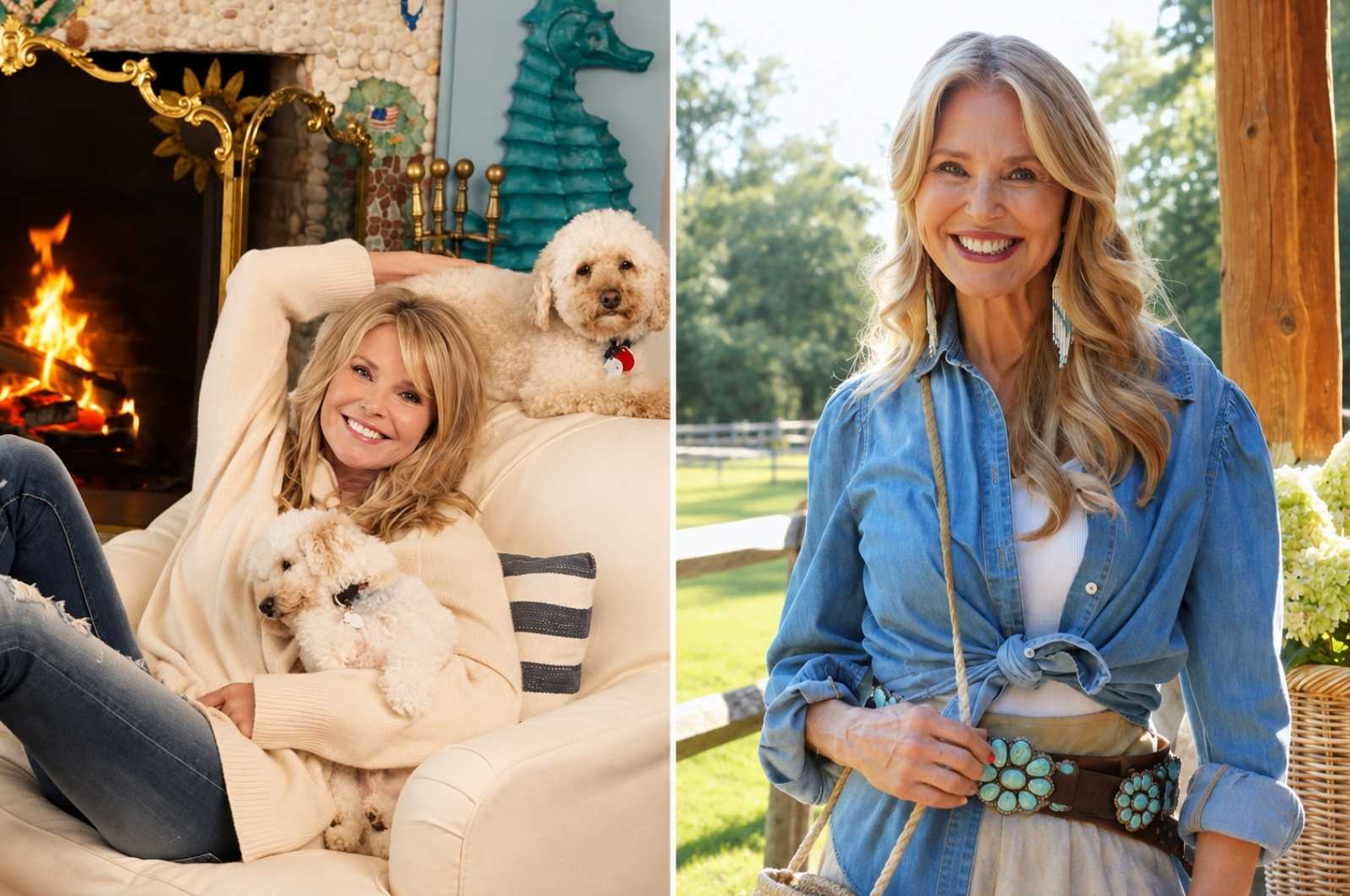
Christie Brinkley has been eating a mostly plant-based diet for nearly six decades. What most people did not know, until recently, is that she quietly dropped the "mostly" a couple of years ago.
In an August 2026 Instagram post, the 72-year-old model, businesswoman, and author confirmed the switch to a fully vegan diet, describing it as easier than most people would guess. "As some of you may know, I'm no longer a lifelong vegetarian," she wrote. "I'm a vegan. For about two years now and people seem to think that's hard to do, but it's really not." She calls what she eats now her "organic garden rainbow diet." And the way she describes it is the least influencer-flavoured plant-based routine of any celebrity in the past year.
The Path From 13 to 72
Brinkley became a vegetarian in her early teens, roughly a decade before plant-based eating had a category, much less a marketing budget. In a 2014 Harper's Bazaar interview she said she had not eaten meat since age 12, after reading a description of Chicago's slaughterhouses.
That commitment held through five decades on magazine covers, three marriages, four children, a book career, and the invention and near-collapse of two different plant-based eating movements.
On Fox & Friends in May 2025, promoting her memoir Uptown Girl, she publicly named the vegan switch for the first time. On Good Morning America and in more recent Instagram posts through 2026, she has fleshed it out. The picture that emerges is not a wellness reinvention. It is someone who simply removed the last remaining animal products and got on with her life.
What She Actually Eats
The Instagram carousel that ran in August walked through the actual food. It is unglamorous in a way that is genuinely useful.
- A garden sandwich built on whatever is ripe from the vegetable beds outside the kitchen.
- No-nut pesto, made from garden basil and the sort of pantry staples anyone has.
- An avocado toast "kitchen sink" loaded with vegetables from that morning's pick.
Her morning routine, described earlier on Good Morning America, is hot water with lemon and cayenne, then coffee, then an almond matcha latte.
That is it. There are no supplements shown, no adaptogens, no branded powders. Which, given how much money there is in selling all of that to a woman with 470,000 followers, is a choice.
The Research on Going Vegan After Seventy
For anyone reading this and quietly wondering whether they are too old to make the change, the evidence is fairly encouraging.
The 20-year ATTICA study, published in the European Journal of Nutrition in 2026 and covering more than 3,000 Greek adults, found that people whose diets most closely resembled a plant-based Mediterranean pattern had a 26 percent lower risk of cardiovascular disease over the follow-up. The strongest effects were not restricted to people who started young.
A separate 20-year study of 65,000 women, presented at the American Society for Nutrition's annual meeting in July 2026, found a 28 percent drop in heart disease in participants whose eating pattern was almost entirely plants. That data set is one of the strongest arguments we have that dietary shifts made in midlife or later still change outcomes. The nutrients most worth watching for anyone making this shift in their sixties or seventies are consistent across the clinical literature: vitamin B12, vitamin D, omega-3, iodine, calcium, and adequate protein. Brinkley has not spoken publicly about supplementation, but the standard clinical guidance from bodies like Physicians Committee for Responsible Medicine is that a daily B12 supplement is not optional for anyone eating fully plant-based. Protein deserves its own note. Research on sarcopenia, the age-related loss of muscle mass, suggests protein needs actually rise, not fall, in the seventh decade. A well-planned vegan diet clears that bar easily on beans, lentils, tofu, tempeh, seitan, and whole grains. Our earlier guide on hitting 100 grams of vegan protein a day walks through what that looks like on a plate. The Skin Question
Every headline about Brinkley eventually gets back to her skin. She has been remarkably direct about this: she believes food is the primary reason.
On Fox & Friends, she told viewers her "number one beauty secret" is that she has been a vegetarian since childhood, adding, "Try it. You'll love it."
There is a growing scientific literature that would agree with the general direction of her claim. A 2026 review in Recent Progress in Nutrition found that plant-forward eating patterns influence facial skin colouration, perceived age, and body composition through mechanisms that can start to show in a matter of weeks. Vegans, on measurement, carry about 56 percent higher plasma carotenoid levels than omnivores, which is the pigment class that reads to the human eye as a healthier skin tone.
The research does not prove that a vegan diet gives anyone Brinkley's cheekbones. It does show that the carotenoid-rich foods she is describing (garden tomatoes, peppers, dark greens, mango, carrots) produce measurable and visible changes.
Picture by Anna Gunselman
The Environmental Motivation She Has Been Quiet About
Brinkley has not framed her switch as a climate statement. But in her Instagram carousel she did encourage followers to think about organic practices and "minimal intervention in nature." Coming from a supermodel with a decades-old cosmetics line and a very large personal platform, that is a real, if soft, signal.
Her position also lands during a broader shift among older women toward plant-forward eating. In our recent piece on why 20 different people we spoke to are going vegan in 2026, the reasons that came up most often for people over 60 were joint pain, blood pressure, and cholesterol numbers. Brinkley's public case, by contrast, is aesthetic and quiet. Both routes seem to get people to the same place. Why the Timeline Actually Matters
The most quietly encouraging line in her interviews is not about food at all.
It is that she made this change at 70, after 57 years of vegetarianism, and describes it as easy. That is the opposite of the message most of us grew up hearing about diet change, which was that windows close and habits calcify.
Brinkley says the ubiquity of vegan options is a big part of why. Two decades ago, a vegetarian trying to go fully vegan would have had to give up almost every restaurant dessert, most cheeses, most breads with butter or dairy in them, and about ninety percent of the packaged snacks in a normal grocery aisle. In 2026, that is simply not the deal on offer any more.
This is the practical part of her story we find most useful: the on-ramp is a lot shorter than it used to be.
Our Take
What we find worth flagging about Brinkley's public shift is what she is not selling. There is no line of protein powders, no supplement partnership, no companion program.
She is a woman who eats from her garden, drinks matcha, and answers questions honestly when asked. In an economy that turns every celebrity food story into a monetised system, that is unusual enough to be notable.
If her story lands with anyone reading this who has been "mostly plant-based" for years and quietly wondering whether to make the last step, the science says the returns are real and the on-ramp is short. Our free 7-day vegan meal plan is a low-pressure way to see how the full-vegan version of your existing meals actually feels. No lifestyle overhaul required. Just a week of plates.