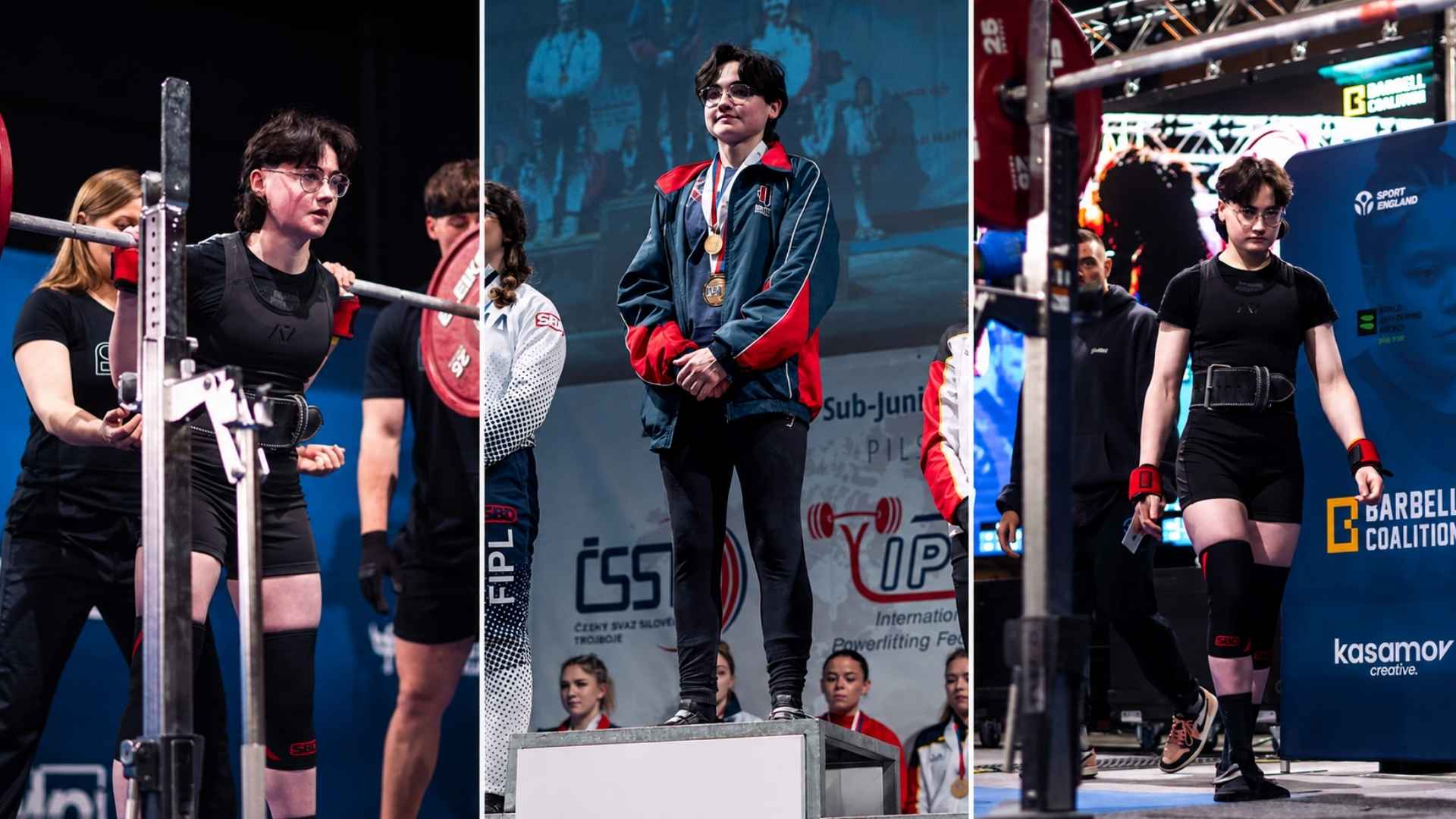
Amelia Fox pulled roughly 3.5x her bodyweight, took the senior title in her first year out of the junior division, and answered the "where do you get your protein" question with a scorecard.
Pictures from Great Vegan Athlets / Facebook
At the All England’s Powerlifting Championships this May, Amelia Fox weighed in just under 61 kg. She squatted a 165 kg personal best. She benched 85 kg, a shade over her previous heaviest.
Then she pulled a 215 kg deadlift, which works out to roughly 3.5 times her bodyweight, and won the senior division outright.
The senior division is the one she was not competing in last year. She was still in the junior class as of 2025.
According to Great Vegan Athletes, her deadlift was the equivalent of lifting three middleweight boxers off the floor at the same time. Fox has been vegan since the age of 17, in 2019. What a 3.5x bodyweight deadlift actually means
For context, elite raw powerlifters at Fox’s bodyweight are considered exceptional once they cross a 2.5x bodyweight deadlift. A 3x pull is world-class. Anything past 3.5x sits in genuinely rare territory, regardless of sex, weight class, or diet.
Fox did it in her first full senior meet, with a personal-best squat and near-PB bench on the same day. Her total (squat + bench + deadlift) came out at 465 kg.
That is a strong number for a 60 kg class competitor at national level, and it puts her firmly in the ranking conversation for British women’s open records.
She described the competition afterwards as a "great battle" in her division and joked that her uncharacteristic celebration of the 215 kg pull might cost her the nickname of "Most nonchalant lifter."
That is what winning looks like when you were not supposed to be able to do it.
Why she went vegan, in her own words
The line most quoted from Fox, and the one that gives this story its real spine, was her explanation of why she made the switch to a plant-based diet as a teenager.
"I initially was hesitant to make the change," she said, "but the more I learned about animal rights and veganism, the more I realised how weak my excuses were and how nothing could justify the way animals are treated."
That is unusual framing for a competitive athlete.
Most vegan sports profiles centre on performance benefits, recovery times, cardiovascular markers, and post-training soreness.
Fox led with ethics, and let the strength numbers speak for themselves after.
What does a 61 kg vegan powerlifter actually eat?
Fox has not published a full dietary breakdown, but the shape of a training day for a competitor in her weight class and lift range is well-documented across the plant-based strength community.
The pattern is not exotic.
Daily protein target
At 60 kg bodyweight, a working strength athlete typically eats between 1.6 and 2.2 grams of protein per kilogram, so 96 to 132 grams per day. Some cutting-phase lifters push higher.
That is not a large amount when spread across four to five meals of tofu, tempeh, seitan, lentils, and legumes.
Carbohydrate anchor
Squat and deadlift training is glycogen-heavy.
Fox’s body composition (small frame, elite output) suggests a diet that leans on rice, oats, potatoes, and pasta to keep training volume repeatable.
Vegan lifters at her level rarely cut carbs.
Fat sources
Nuts, seeds, avocado, olive oil, and tahini are standard.
Fats matter for hormone health, and for small-frame female athletes carrying heavy training loads, chronic underfuelling is a bigger risk than any macronutrient split.
Recovery
Iron intake matters more for menstruating women lifting heavy than any protein detail.
Lentils, tofu, spinach, and fortified plant milks together clear the bar without supplementation for most people. B12 does need a supplement or fortified foods; that is universal for plant-based athletes.
Fox is not the only one
The reason Fox’s result registers as a story rather than a fluke is that vegan women are now visible near the top of multiple powerlifting weight classes.
Sophia Ellis, another British vegan lifter, broke the European deadlift record at 245.5 kg in 2023 and now holds around 20 national and international records.
Katya Gorbacheva, a nationally qualified American vegan powerlifter, was named Best Lifter at Moscow Lights this April, eight months after giving birth. That is three named vegan women in three different countries, at three different life stages, standing on top of national or international powerlifting podiums inside a 12-month window.
The narrative that vegan women cannot get strong at the elite end of the sport is losing on the scorecard.
What this means for anyone considering the switch
The counterintuitive part of Fox’s story is not the diet. It is the timeline.
She made the switch at 17. She was not a competitive lifter yet. The strength came after.
The "you cannot be strong without meat" argument usually assumes someone who is already strong will lose ground if they switch. Fox did not lose ground because she was not on any ground yet.
She built the strength from scratch, on plants, and she built it fast enough to move up a division in one year.
That is a different case from an established athlete considering a transition.
Both cases are real. Both work. Fox’s case is the one that quietly dismantles the argument that plant protein cannot support the highest levels of strength adaptation from the ground up.
Frequently asked questions
How much did Amelia Fox deadlift at the English Championships?
215 kg, at a bodyweight of just under 61 kg.
That is roughly 3.5 times her bodyweight, a ratio that puts her in genuinely rare territory for elite raw powerlifting. Her total across squat, bench, and deadlift was 465 kg.
Is Amelia Fox actually vegan?
Yes. She went vegan at 17, in 2019, and has confirmed the transition was ethics-driven rather than performance-motivated.
She has been vegan through her entire competitive lifting career.
Can vegan women build enough strength for competitive powerlifting?
Yes. Fox, Sophia Ellis (European deadlift record holder at 245.5 kg), and Katya Gorbacheva (Best Lifter at Moscow Lights 2026) are current examples across three countries.
Plant-based diets can hit the protein, calorie, and micronutrient targets required for elite strength adaptation.
What did Fox say about why she went vegan?
She said her hesitation about switching gave way once she learned more about animal rights, and that she "realised how weak my excuses were and how nothing could justify the way animals are treated."
She led with the ethical case, not the performance case.
One more thought
Amelia Fox does not fit the shape most people carry in their heads when they hear the phrase "vegan athlete." She is small.
She is quiet on the platform.
Her celebration of a world-class deadlift was, by her own admission, out of character.
None of that matters against the number on the bar. 215 kg.
Roughly 3.5 times her bodyweight. Pulled off the floor by a 25-year-old who has not eaten an animal since she was 17.