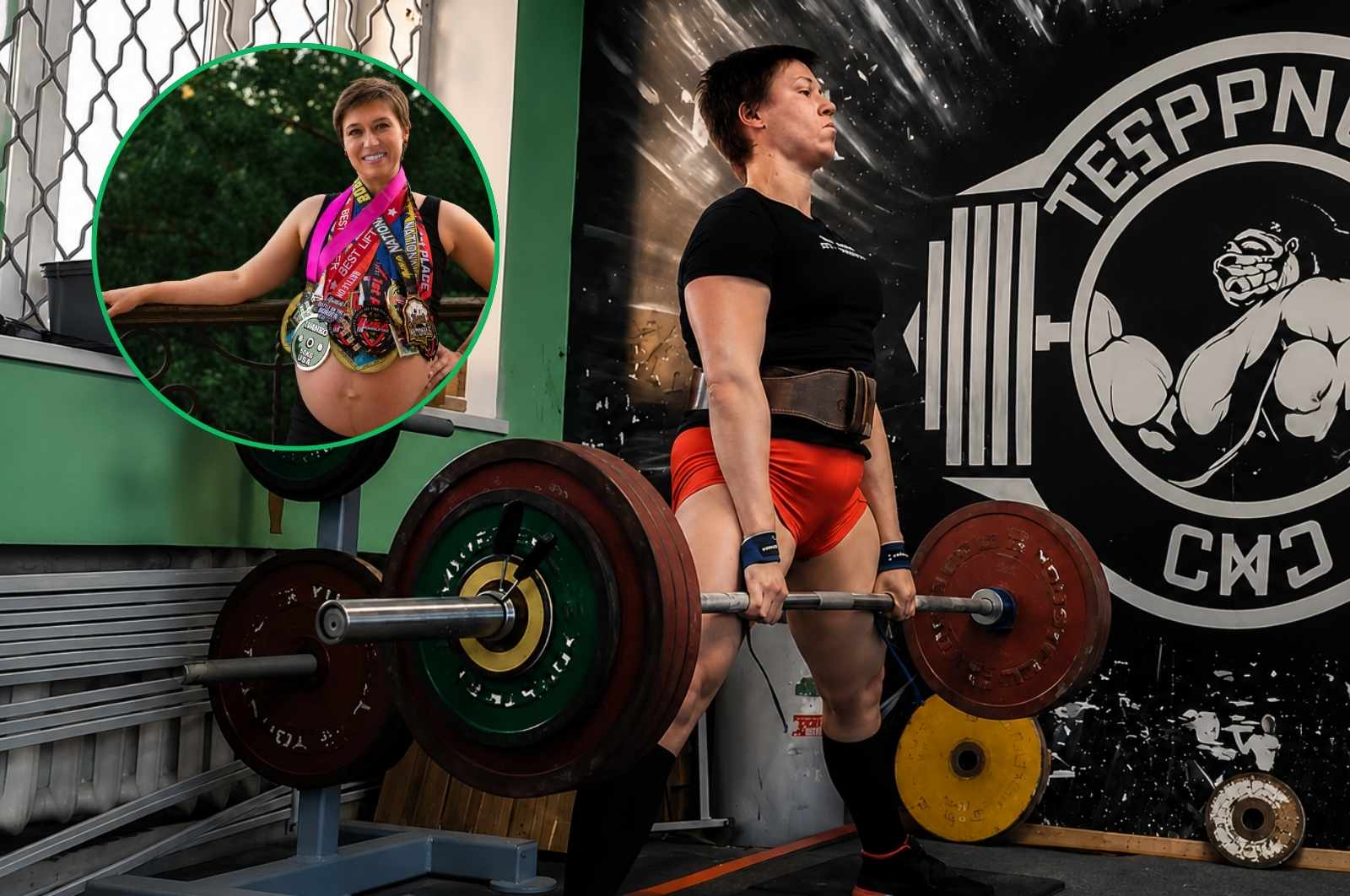
Katya Gorbacheva walked into a Moscow meet against 600 competitors, lifted a personal-record 476 kg total, and was named the strongest female lifter in the room. She has been eating plants the whole time.
Pictures from Katya Gorbacheva/Instagram
At the Moscow Lights meet this April, Katya Gorbacheva squatted 176 kg, benched 105 kg for a 10 kg personal best, and pulled 195 kg off the floor for another 5 kg PR. Her total came out at 476 kg.
She won first place in the 76 kg open weight class and was named Best Lifter among all raw female competitors, out of 182 women in the raw full-power division.
The full event had more than 600 athletes.
She had given birth eight months earlier. She is vegan.
She has been vegan through the pregnancy, through the birth, and through the return-to-platform training cycle that got her back on the podium in less than a year.
What she actually did in the eight months between giving birth and Best Lifter
Gorbacheva is not a first-time competitor.
She is a nationally qualified powerlifter based in North Carolina, competes with the Vegan Strong PlantBuilt team, and runs her own coaching company, TotalBodyLab, working with plant-based athletes.
That matters, because the return-to-lifting timeline for a postpartum athlete is not something a beginner improvises.
Her coach through the comeback was Alexei Bakhirev, and Plant Based News reported that his guidance was central to how fast she got back to competitive form.
Gorbacheva’s own framing of the meet was pointed. In a statement sent to PBN, she said: "This performance is about more than competition. It’s about redefining what’s possible for women in sport, especially mothers returning to elite competition."
That is the sentence that turns a strong meet result into a story worth telling.
Postpartum athletes are told, almost universally, that returning to heavy loading takes eighteen months minimum, that plant protein is not enough to rebuild connective tissue, that breastfeeding will strip a body of the strength it needs to squat heavy again.
She did the opposite in half the expected time.
What a plant-based postpartum powerlifter eats
Gorbacheva has been open about her diet since she qualified for the national team.
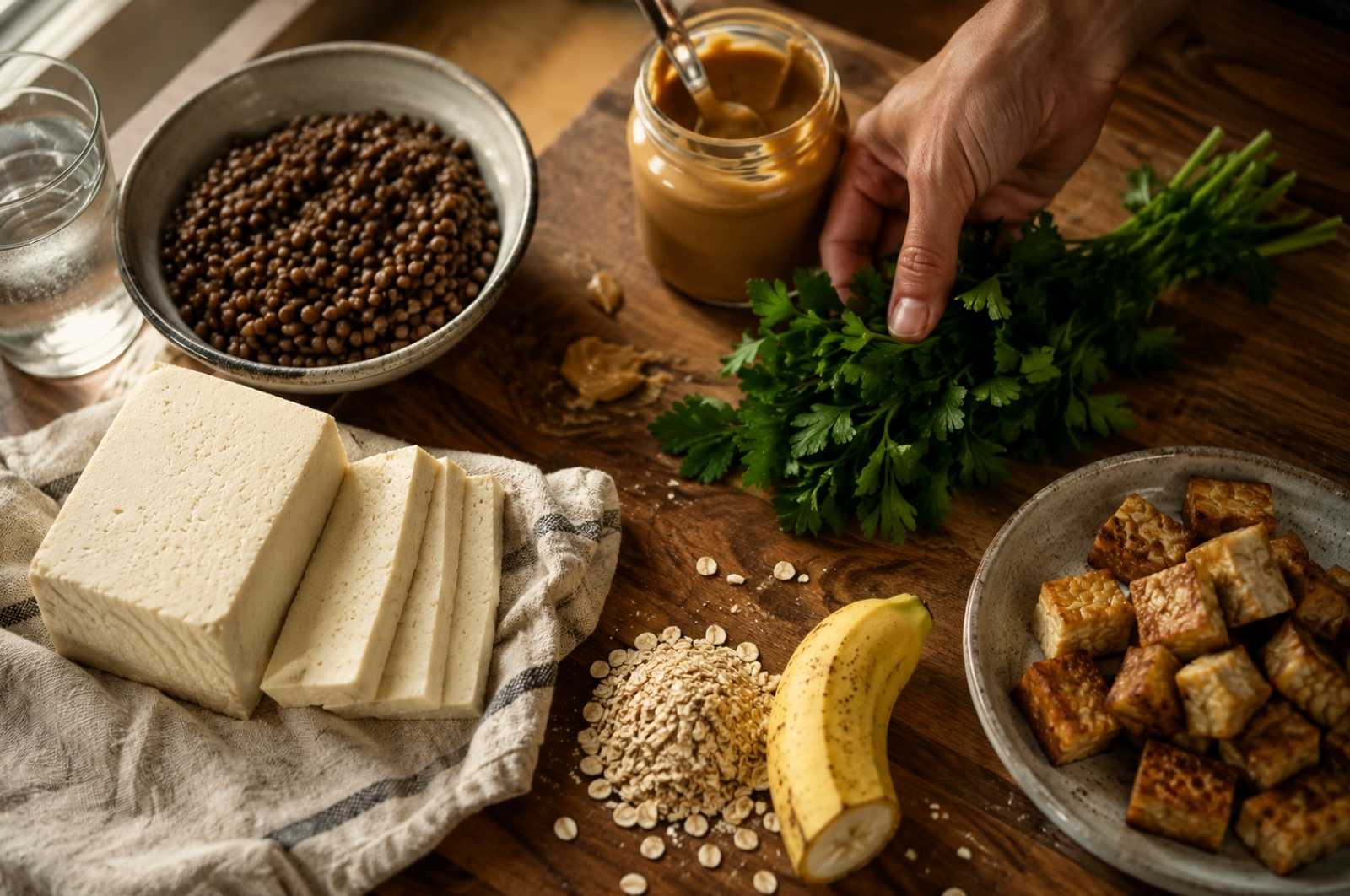
In a 2023 interview with Plant Based News, she went through her staples: seitan, tempeh, tofu, lentils, peanut butter, oats, and a rotation of plant-based meat alternatives when she needs to hit protein numbers on a tight day.
For a lifter walking into a 76 kg weight class with strength standards that rival some men’s open records, protein targets sit around 1.6 to 2.2 grams per kilogram of bodyweight.
At her weigh-in, that puts her daily intake somewhere between 122 and 167 grams. She hits it on plants.
The staples she leans on
Tofu and tempeh for complete-protein anchor meals. A 100 g serving of firm tofu delivers around 15 g of protein and a full amino acid profile.
Seitan when the target is high protein density in a small volume. Vital wheat gluten gives roughly 25 g of protein per 100 g of dry weight.
Lentils and beans for slow-digesting carbohydrate plus another 8 to 9 g of protein per cooked cup.
Peanut butter, oats, and bananas stacked into pre-training meals for calories that do not sit heavy.
Vegan meat alternatives as a flex, not a foundation. Used to close a protein gap on a busy day, not as the whole plan.
The pattern is not novel.
Vegan athletes who lift heavy have been eating some version of this for a decade.
What is worth noting is that this pattern rebuilt a body that had just been through pregnancy, delivery, and the first eight months of nursing, and put it back on top of a 182-woman division.
Why this matters beyond one meet result
The dominant assumption about postpartum athletes is that the return to competition is a slow, cautious, animal-protein-heavy rebuild.
The dominant assumption about vegan strength athletes is that they are outliers who scrape by on determination and a lot of tofu.
Gorbacheva is a data point against both assumptions at once. Not a hypothetical.
A woman with a bib number, a scorecard, and a Best Lifter trophy from a meet with more than 600 competitors.
And she is not alone in that division. Sophia Ellis, a British vegan powerlifter, broke the European deadlift record at 245.5 kg in 2023. Amelia Fox, a 61 kg English lifter, pulled 215 kg (roughly 3.5x her bodyweight) this May.
The narrow claim that vegans cannot get strong at the elite level is now visibly wrong at multiple weight classes on multiple continents.
The wider signal: plant-based mothers are showing up in elite sport
The Gorbacheva story sits inside a broader shift.
Vegan Strong PlantBuilt has been putting plant-based athletes on the Mr America and IPL podiums for over a decade. Great Vegan Athletes tracks ongoing world records held by vegan lifters across weight classes.
The postpartum angle is what makes this one different.
It puts the plant-based question directly against the physiological hardest case: rebuilding elite strength while nursing, while sleep-deprived, while carrying the metabolic load of new motherhood.
And the answer, in one Moscow arena in April 2026, was 476 kilograms.
Frequently asked questions
How much protein does a vegan powerlifter need after giving birth?
Postpartum and lactating athletes usually add another 15 to 25 g per day to support recovery and milk production.
For a 76 kg lifter like Gorbacheva, that puts a working target in the 140 to 190 g per day range.
Can you build muscle on a vegan diet while breastfeeding?
Yes, and the physiology is not different from any other athlete.
What matters is total calories, total protein, spread across the day, with a full amino acid profile hit through the week.
ofu, tempeh, and soy foods carry the amino acid load on their own. Lentils, beans, seitan, oats, nuts, and seeds fill the rest.
The catch is planning around a newborn, not the diet itself.
Who is Katya Gorbacheva?
Gorbacheva is a nationally qualified American powerlifter based in North Carolina, competing with the Vegan Strong PlantBuilt team.
She founded TotalBodyLab, a coaching company that combines athletic performance, wellness tech, and environmental advocacy. She went vegan for health reasons after a routine blood test at 23 flagged borderline high LDL cholesterol.
What was her total at Moscow Lights 2026?
476 kg across squat (176 kg), bench (105 kg, a 10 kg PR), and deadlift (195 kg, a 5 kg PR). First place in the 76 kg open weight class. Named Best Lifter among all raw female competitors, out of 182 women in the raw full-power division.
There is a particular way postpartum women get talked to about their bodies. The tone is soft, cautious, permission-granting.
You will get back to it. Give yourself grace. Take your time.
None of that language survives contact with a video of Katya Gorbacheva locking out a 195 kg deadlift with a red-lighted crowd behind her.
Whatever the "right" way is supposed to look for a nursing mother returning to strength sport, she found a different one. On plants.
If you have been curious about what a plant-based diet can actually support at full physical output, our beginner’s guide to going vegan covers where to start, and our category on plant-based recipes has enough weekly meal ideas to hit the protein numbers above without living on tofu alone.