The Viral Advice to Wait 90 Minutes for Coffee Is Half Right. The Real Rule Is Different.
For roughly two years, one piece of caffeine advice has been repeated everywhere: wait 90 minutes after waking before your first cup.

The viral copper wire trick promises bigger harvests and slug-free beds, but the science tells a quieter, more honest story than the headlines do.

Here is the short version. A copper wire wrapped around a stick will not feed your vegetables, will not fix your soil, and will not reliably keep slugs away.
I wanted that to be true when I first saw the trick on my feed. It looked tidy, cheap, and gently magical, which is exactly the kind of garden hack that spreads fast.
So I went looking for the actual evidence instead of the recycled blog claims. What I found was more useful than the hack itself, and it changed how I think about every “one weird trick” that lands in my notifications.
The idea is simple enough to feel believable. You coil copper wire around a bamboo or wooden stake, push it into the soil near a plant, and wait for the benefits to arrive.
Most versions of the trick promise three things at once: a slow release of copper to nourish the plant, a tweak to soil chemistry, and a slug barrier. It is a lot of work for one piece of wire to do.
The deeper roots of this go back to an old practice called electroculture, where people bury copper rods or wires and claim they pull energy from the air into the soil.
The aesthetic is charming, the spiral coils look almost ceremonial, and the promise of free fertility is hard to resist.
No, and the chemistry is the reason. A solid piece of copper wire sitting in soil barely dissolves, so it cannot deliver a meaningful dose of copper to a plant’s roots.
Plants do need copper, but only in tiny trace amounts, and they absorb it as dissolved copper ions rather than as bits of metal. A coil of wire does not hand over those ions in any quantity that matters.
There is also a catch most viral posts skip: copper deficiency in soil is genuinely rare.
According to the University of Minnesota Extension, most soils already supply enough copper for vegetables, with shortfalls mainly showing up in unusual sandy or high-organic soils.
If you do not have a deficiency, adding more copper solves a problem you never had.
And if you genuinely do, the fix is a measured copper sulfate or chelated copper application based on a soil test, not a guess wrapped around a stick.

Electroculture Copper Gardening Antenna
✓primeHarness the Earth’s natural energy to supercharge plant vitality, no chemicals or fertilizers required.
$39 from AmazonAs an Amazon Associate, we earn from qualifying purchases.
This is the part I had not seen mentioned anywhere in the viral versions. A 2025 study published in PLOS ONE actually buried dowel rods coiled with copper wire in container vegetable pots and measured what happened.
The researchers found that passive copper setups did not produce a consistent improvement in plant growth or yield, with any differences described as sporadic rather than reliable. You can read the full open-access study here.
That is exactly the kind of test these claims rarely get. When someone finally coiled the wire, planted the seeds, and counted the results, the magic did not show up.
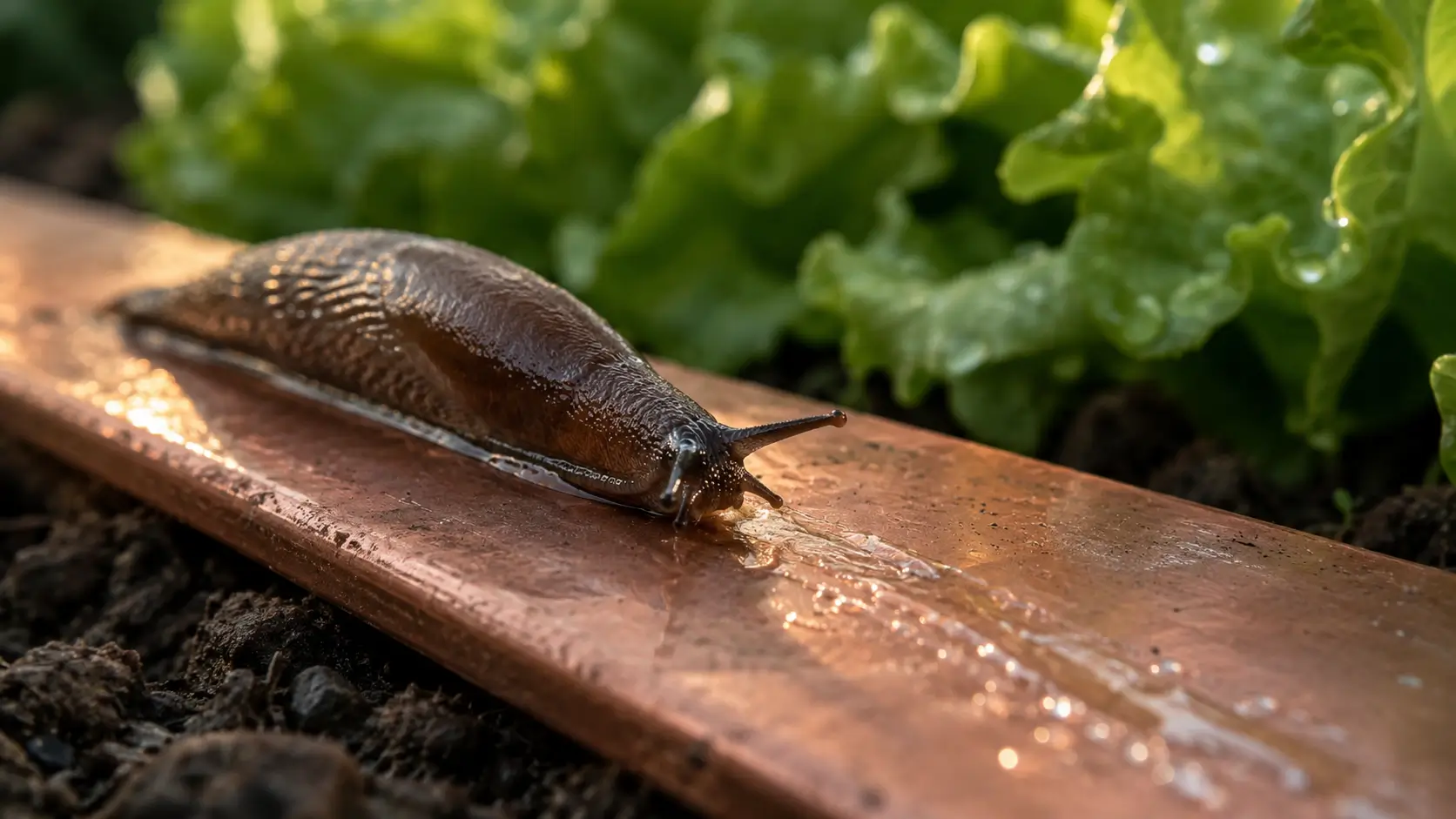
Barely, and not the way you would hope. The popular theory is that copper gives slugs a tiny shock, but a controlled trial found the effect close to useless in a real garden.
The Royal Horticultural Society ran a trial on lettuce and found that copper tape, along with grit, eggshells, pine bark, and wool pellets, made no measurable difference to slug damage.
The plants protected with copper got eaten at the same rate as the plants with no protection at all. The reason is almost funny: a slug’s thick mucus lets it glide over surfaces as sharp as glass, and a thin copper barrier is no real obstacle.
A loose coil of wire on a stick is an even weaker barrier than a continuous strip of tape. If slugs are wrecking your seedlings, copper is not the answer.
Yes, and this is the honest takeaway. The stick works as a plant support. The copper is mostly decoration.
A sturdy stake next to a tomato, pepper, or bean plant genuinely helps. It keeps stems off the wet ground, improves airflow, and stops heavy fruit from snapping the plant in a storm.
That airflow point matters more than people realize. Plants with good air movement around their leaves tend to get less mildew and rot, simply because the foliage dries faster after rain.
So if the copper-and-stick look brings you joy, stake your plants and enjoy the aesthetic. Just credit the stake, not the spiral.

10pcs Electroculture Plant Stakes
✓primeElectroculture copper gardening Antenna uses 99.9% copper wires to be wound clockwise onto wooden sticks.
$15 from AmazonAs an Amazon Associate, we earn from qualifying purchases.
Here is where I would put the energy instead. None of these are glamorous, but all of them are backed by how plants and pests actually behave.
Growing even a little of your own produce changes your relationship with food. A windowsill of herbs or a few pots of greens makes a plant-based plate feel closer and more ordinary.
That is part of why I care whether garden advice is real. When you are leaning into more vegetables, you want trustworthy methods, not folklore that wastes a season.
If you are still building that habit, our guide on how to start a vegan lifestyle without feeling overwhelmed pairs nicely with a tiny home garden, and these 20 reasons people are going vegan in 2026 are a good reminder of why the effort is worth it.
And when your harvest comes in, you will want something to do with it, so our vegan recipes are a soft landing for whatever your stakes managed to hold up.
Not in any meaningful way. A solid copper wire dissolves far too slowly to shift the pH or chemistry of your soil, so the claim does not hold up in practice.
In small amounts it is mostly harmless, just ineffective. The real risk comes from overdoing copper across a garden over many years, since excess copper can build up and become toxic to plants and soil life.
No. Controlled studies, including the 2025 container trial, have not found reliable yield gains from passive copper setups, which is why you will not see it recommended by horticultural research bodies.
Physical removal in the evening, encouraging predators like frogs and ground beetles, and protecting young seedlings until they toughen up. For severe pressure, nematodes are an evidence-based option.
I do not think the copper wire crowd is being dishonest. The trick is pretty, it feels resourceful, and wanting your garden to thrive is a good instinct to have.
But I would rather give my plants what the evidence says they need: decent soil, a real stake, a morning watering, and a few slug patrols. Those are the boring things that actually carried my tomatoes through last summer.
If this nudges you toward growing a little more of your own food, that is the part I care about most. Every pot of greens on a sill is a quiet step toward eating more plants, and you can ease into the rest whenever you are ready with our beginner-friendly vegan starting guide.
Grocery list included!
No spam. Cancel anytime.